



 |
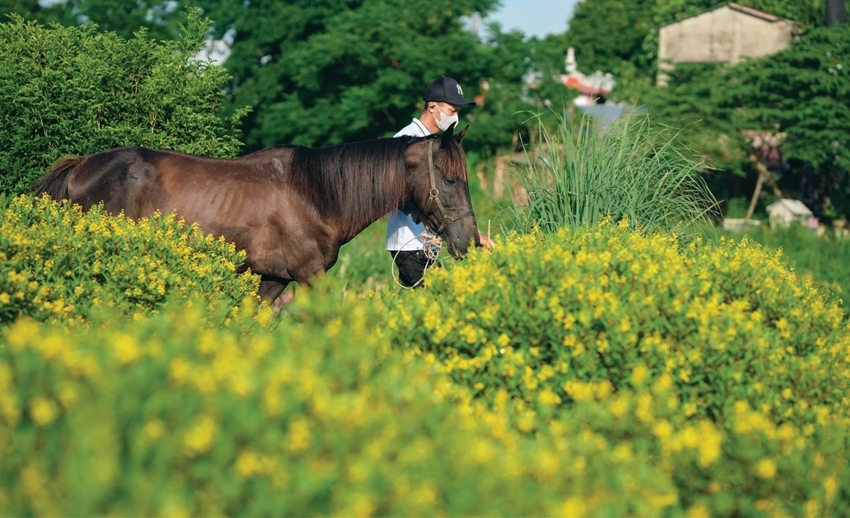
| Edufarm Hue staff tending and leading horses around the farm. Photo by: Edufarm |
Mr. Nguyen Xuan Hoa, a researcher of Hue culture, notes that the land of the former capital was once closely connected with horses. In Sia (a town in Hue), horse-drawn carriages used to travel along dirt roads. Within the imperial court, cavalry units, horse handlers, saddles and bridles, and Nguyen Dynasty attire have all been preserved to this day.
Hue possesses landscapes as picturesque as paintings: Thien An Hill with pine forests whispering in the sunlight, gentle slopes stretching like a green carpet; Bach Ma – windswept high mountains blending with grass, clouds, and sky; the vast Tam Giang Lagoon, etc., all of these could become routes for horseback riding.
Within the trend of green and slow tourism, horseback riding is a quiet, non-mass activity, suited to souls seeking harmony with nature. In the search for new directions for Hue tourism, horseback riding emerges as a promising suggestion. But how can it steer clear of imitation and retain the soul of Hue in every sound of hooves?
In the Imperial Citadel, images of horses have reappeared at certain times through horse-drawn carriage services – still small in scale, but like a musical prelude. Meanwhile, at Edufarm Hue Ecotourism Farm near the old town of Bao Vinh, a horseback riding experience amid nature is already in operation. This is a friendly ecological farm where visitors can ride horses along dirt paths by the fields and take part in rustic, countryside experiences.
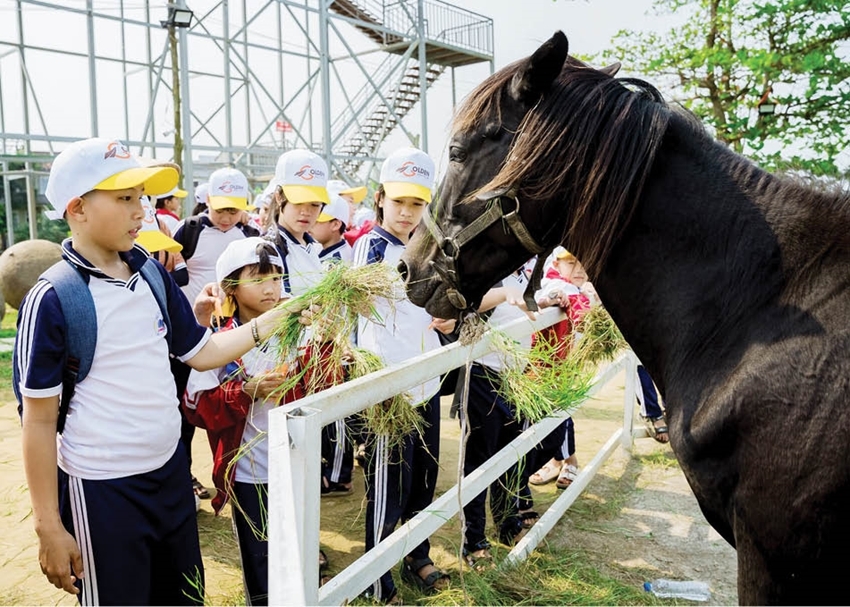 |
| Children delighting in learning how to care for horses.Photo by: Edufarm |
Mr. Nguyen Minh Chau (from An Cuu Ward) recalls that his first horseback riding experience at Edufarm made him feel as though he had “had moved beyond every image of Hue he had ever imagined.” When the horse stopped beside a wide grassy slope, he “felt something very natural, very alive.” For Mr. Thin, Edufarm’s manager, horseback riding is just one piece in the broader picture of agricultural experiences the farm aims to create. What the model focuses on is helping children learn to connect with nature, and to understand and love animals. “When you understand the animal, the riding experience becomes far more reassuring and enjoyable,” says Mr. Thin.
Speaking of equestrian tourism, researcher Nguyen Xuan Hoa suggests that Hue should develop it based on its own cultural values rather than imitating the models of Da Lat or other places. Hue could draw on images of traditional horse-drawn carriages, recreate horseback riding within the Imperial City, or build photo spots themed around the royal court. But reaching a truly authentic level is not easy. “Horseback riding is not a common habit. It requires serious training, a large herd of horses, high maintenance costs, and very strict safety requirements. A proper horseback tour for 15-20 guests necessitates a corresponding number of horses, which poses a heavy economic challenge,” explains Mr. Hoa.
He further analyzes that spaces like Thien An and Bach Ma are undeniably beautiful, but the key question is whether investors can see profitability and are willing to take the plunge. Horseback riding alone is not enough; if Hue wants to succeed in the long term, it must create a supporting service ecosystem.
From the perspective of a manager, Ms. Tran Thi Hoai Tram, Director of Hue City Department of Tourism, shares that equestrian tourism has potential but can only become a true product when businesses participate with a long-term vision. “We hope to see more distinctive and innovative tourism models to extend visitors’ length of stay. Horseback riding can certainly become a highlight, but it must be carefully researched and professionally implemented,” says Ms. Tram.
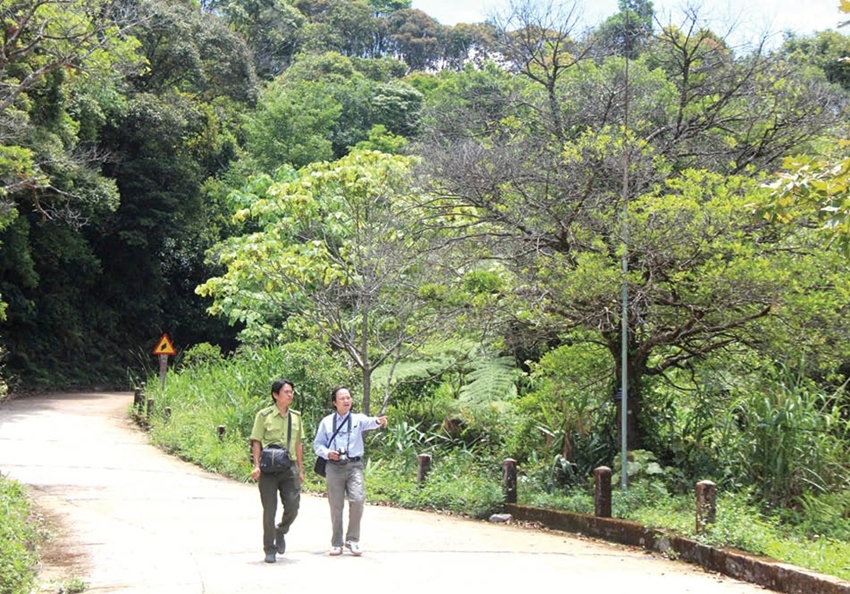 |
| Bach Ma boasting ideal routes for horseback riding experiences. Photo by: Le Tho |
According to Ms. Tram, horseback riding is not simply about “bringing horses to serve tourists,” but involves an entire system of investment: stables, care and training personnel, safety standards, experiential routes tied to Hue’s identity, and connections with surrounding services. Hue has advantages in its hills and forests, ecological farms, and heritage spaces, yet the product will struggle to endure if implementation is superficial.
“The commitment of businesses is the decisive factor. If there are serious investors, the Department of Tourism is ready to provide maximum support, ranging from procedures and connections to potential sites such as Thien An, Bach Ma, and suburban hill areas, … to including the product in promotional campaigns,” says Ms. Tram.
Looking at reality, potential does not equal to a smooth or easy path, as Hue currently lacks breeding facilities, trainers, safety standards, and even the basic conditions required for a tourism model that demands high levels of professionalism.
Difficult as it may be, there is still hope that in a near springtime, on the slopes of Thien An or the paths leading up to Bach Ma, the sound of hooves will become familiar and welcoming, opening a new path that feels both novel and familiar, much like the spring beauty of the former capital inviting travelers from afar.