



 |
Sowing green seeds in the vast forest
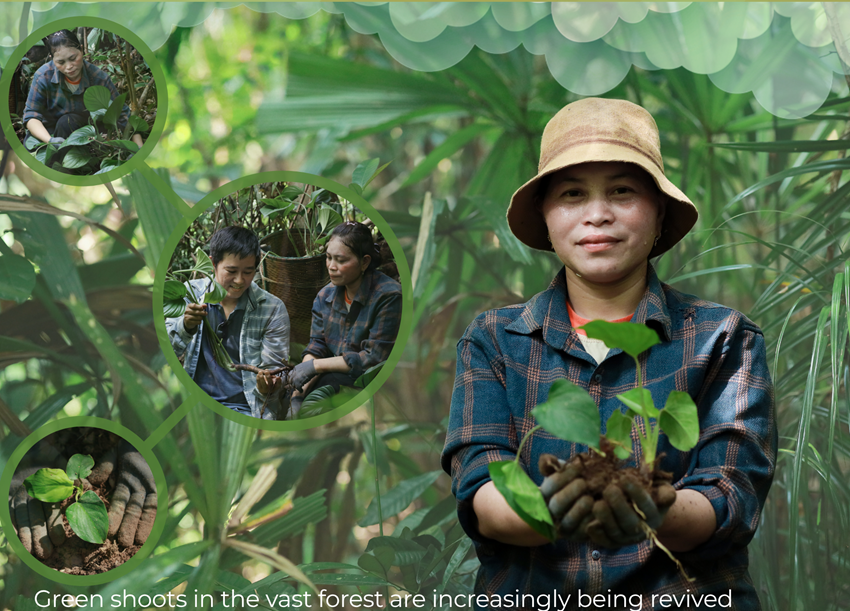
As part of the project to develop the value chain of native medicinal plants in the Central Truong Son region, the WWF-Vietnam carried out the component “Supporting the Green Alliance to implement business plan under CAL Accelerator mechanism”, which ran from August 3, 2024 to June 30, 2025. Accordingly, the WWF-Vietnam and the Green Alliance Company conducted surveys, evaluations, and selected medicinal plant species and cultivation areas to identify potential medicinal herbs for raw material zoning plan. Among these, thien nien kien (homalomena occulta) and gung gio (bitter ginger, or zingiber zerumbet) were identified as two priority species for development.
According to project’s experts, these two plants have high economic value, are suitable for natural conditions, have stable markets, are easy to propagate, and receive high consensus from the community. The project aims to establish cultivation areas for homalomena occulta and bitter ginger in Ka Ron - A Ho village, A Roang commune, A Luoi district (now A Luoi 4 commune) with a scale of 5 hectares; and in Village 5, Thuong Long commune, Phu Loc district (now Long Quang commune) with about 5.1 hectares. As such, the project developed a plan for sustainable raw material area development and medicinal herb business for the 2024-2030 period, with a dual objective of improving livelihoods for local communities and conserving forest resources.
After one year of implementation, the project has restored and developed over 4 hectares of degraded forest and barren land by planting more than 14,000 homalomena occulta plants and 3,500 bitter ginger plants; it has also enhanced the capacity of over 70 households through technical training programs on cultivation and sustainable harvesting. Simultaneously, a sustainable value chain was successfully established through the signing of two long-term cooperation agreements (to 2030) between the Green Alliance Company and local cooperatives and community forest management boards; two plans for medicinal raw material area development for the 2024-2030 period were also developed, creating a roadmap for expansion.
Mr. Ho Dang Binh, Head of Research and Development at the Green Alliance Company, shared: Green Alliance's commitments to building raw material areas and developing community-based markets, protecting and promoting sustainable values from the forest, are testaments to the effectiveness of the four-stakeholders linking model: the State, scientists, businesses, and farmers. The Green Alliance also consistently prioritizes maintaining the sustainability of natural forest ecosystems, ensuring a harmonious balance between forest protection and local economic development. In the next phase (2026-2030), the company aims to expand the cultivated area to 20-30 hectares in each community; complete the nursery, build preliminary processing facilities, and invest in deep processing to create value-added products such as essential oils, medicinal powders, and herbal teas. The strategic focus is on promoting exports, bringing the Central Truong Son medicinal herb brand to the world.
 |
Taking people as the center
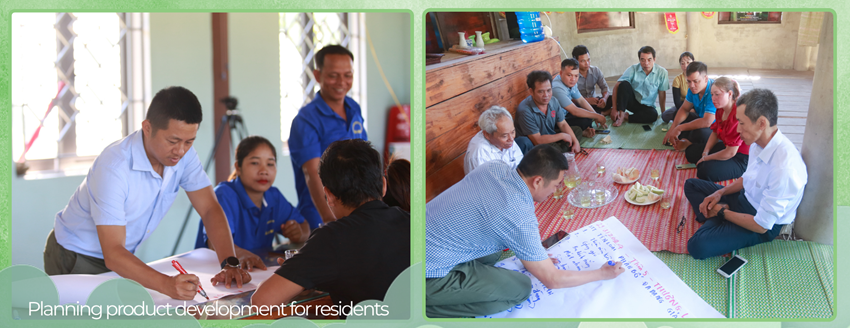
To encourage the community to boldly invest in developing medicinal plants under the forest canopy, the Green Alliance Company has implemented a production linkage model along the value chain, creating stable income for the people.
The A Roang Medicinal Agriculture Cooperative is a typical example of the company's objective. Established in 2019 with many difficulties, thanks to the support of the project, the WWF, and the Green Alliance, the Cooperative has become an exemplary economic model in exploiting and conserving medicinal plants.
Ms. Blup Thi Tha, Director of A Roang Medicinal Agriculture Cooperative, stated that in the initial operating phase, raw materials were primarily collected by the locals from the forest, leading to unstable supply. Moreover, there were times when people from surrounding areas rushed into the forest to hunt for medicinal herbs, exploiting them indiscriminately and without selection, causing many native herbal species to gradually disappear. From 2023, the Cooperative advocated encouraging people to limit destructive exploitation, shifting to a model of both harvesting and conserving; simultaneously, it organized training courses on nursery techniques and medicinal plant care.
By 2024, with the support from WWF-Vietnam and Green Alliance Company, the Cooperative continued to receive training on sustainable livelihood models, especially techniques for planting, caring for, and developing herbal raw material areas under the forest canopy. From August 2024, the Green Alliance signed a cooperation agreement with A Roang Medicinal Agriculture Cooperative to develop a plan for community recovery and sustainable development, which includes planting medicinal herbs under the forest canopy and in home gardens, and guaranteeing product off-take for the Cooperative. Currently, the company has purchased 40 tons of homalomena occulta and 60 liters of essential oil, bringing in over 200 million VND for the Cooperative.
Ms. Blup Thi Tha shared that Green Alliance Company not only provides comprehensive technical support, from seedlings, planting, and care to sustainable harvesting, but also purchases the products, allowing local people to be reassured in their production. Developing medicinal plants under the forest canopy also contributes to increasing biodiversity and more effective forest protection by creating diverse canopy layers within natural forests. This model further motivates people to frequently enter the forest, combining their efforts with patrolling and protecting the forest.
In addition to A Roang Cooperative, the Green Alliance is signing product off-take agreements with four community forest protection groups within the Saola Nature Reserve, and two community groups in A Roang and Thuong Long communes. Community forest management boards are responsible for managing and protecting the raw material areas and sustainable harvesting, while the cooperatives will organize production, monitor quality, and prepare products. This collaboration will create a sustainable link, promoting economic development while maintaining the balance of the natural forest ecosystem.
Photos: Tuan Anh