



 |
| Director of Hue One Food Company Ngo Duc Vuong |
Hue is famous for its street food, with countless renowned savory cakes that hardly need an introduction. Among them is the specialty pressed rice cake from the coastal area of Thuan An. This dish has been further developed by Hue One Food Company (311 Nguyen Sinh Cung, Vy Da Ward, Thuan Hoa District, Hue City), which invested in research and production technology to turn it into a high-value commercial product for domestic expansion and future export. Vuong has only recently moved to the U.S and is still adjusting to life here. He has wasted no time resting and settling in and instead immediately started searching for a warehouse, importing raw ingredients, and selecting production equipment to establish a factory that produces fresh Thuan An pressed cakes right in the U.S.
He shared, “Pressed rice cake was originally a street food, made and enjoyed on the spot. With our modern production line and Hue One Food’s secret flour formula, this humble traditional snack has been elevated to a high-quality specialty product, appealing, convenient, and accessible to a wide range of customers. Now that I’m in the U.S, my mission has expanded to introducing Hue culture to everyone.”
How did your company begin the idea of starting a business that exports to the U.S?
For Hue One Food, developing the story of Hue pressed rice cakes in the U.S has been our guiding principle throughout product development. Our top goal is to take a product from our homeland and tell its local story to a vast market like the U.S. We see this as both a challenge and an opportunity to continually improve the pressed cake product at each stage of development.
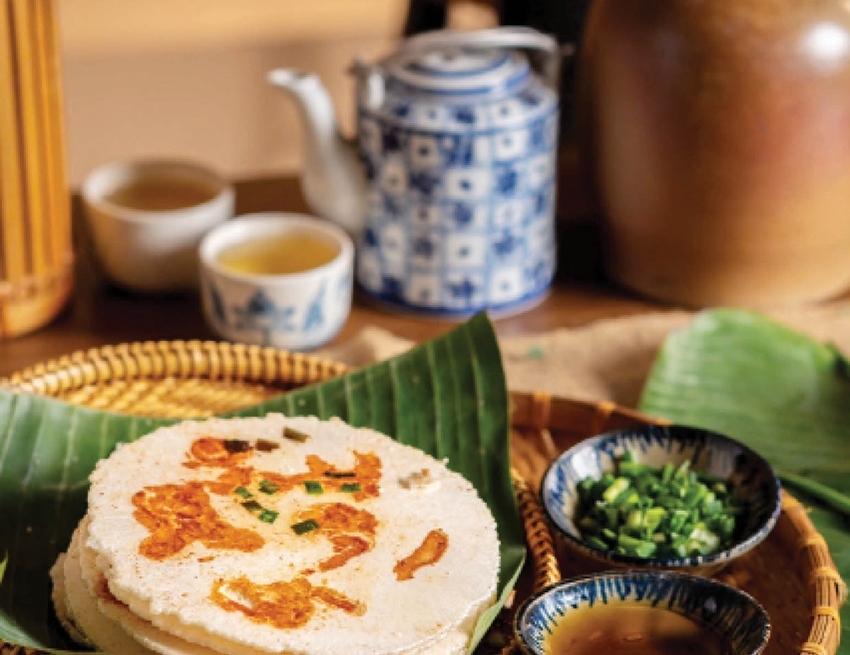 |
| Hue pressed rice cakes served to international customers |
What challenges have you faced in bringing your product to the international market, particularly the U.S?
The strict regulations in many international markets, especially the U.S, regarding ingredients and product composition has been one of the biggest hurdles for us. We’ve always wanted to share our homeland’s story with the world through our native products and ingredients. However, due to stringent regulations, many of our unique local ingredients cannot be widely introduced. In addition, logistics between countries has also posed a significant challenge for the company.
What local elements from Hue, such as ingredients, culture, or handicraft decorations, will help your business stand out in the U.S. market?
The story of Hue, its people, and its spirit is the foundation and operating philosophy of Hue One Food. The tale of Hue tapioca flour, a special flour that locals have long studied and developed from cassava during food preservation, is one that Hue One Food want to bring to this market. Tapioca flour has sustained generations of Hue residents through difficult times and has been the base for many iconic dishes, including Hue One Food pressed cakes.
What has the market research and entry process into the U.S. been like for your company?
Hue One Food and I have received tremendous support from local authorities and industry leaders during our research on U.S market processes, plans, and legal requirements. We’ve also had help from the Hue overseas community in the U.S, who assisted with market research and operations. Their support has provided us with many opportunities and smoother paths since the company's inception and growth.
What strategies have you used to make your product stand out in the global market?
We focus on traditional products with a touch of innovation. In 2025, we will distribute our current products to serve Vietnamese consumers. By 2026, we aim to develop new, unique products tailored to international consumer preferences.
Can you share your experience working with U.S partners (distributors, retailers, or service providers)?
I’ve visited many Vietnamese and American supermarkets and had discussions with local distributors. We found that retailers have been very supportive in allowing us to test our products in the market. Perhaps our sincerity, along with a win-win approach, is something our partners truly appreciate.
What challenges in logistics and transportation have you faced when exporting to the U.S, and what improvements do you hope to see?
High shipping costs, fluctuating freight rates, complicated customs procedures, and the risk of delayed deliveries are key issues we hope can be improved when exporting to the U.S. These challenges also present major obstacles for Hue-based startups seeking to conquer this promising market.
If you could change one thing to support export startups, what would it be?
I hope for deeper support for small and medium-sized Vietnamese businesses and better opportunities for Vietnamese people in the U.S to access foreign business support policies from the government of Vietnam. This would make it easier for them to operate and grow.
What are your expectations for the U.S market in the future for your business?
From the very start of our business strategy in 2021, Hue One Food set a goal of reaching VND 20 billion in annual revenue by 2025 and officially exporting our products through formal trade channels. Now that we can manufacture directly in the U.S, this growth is becoming more tangible than ever.
Do you have any advice for startup businesses in Hue looking to export their products to the U.S?
Bringing the specialties of Hue to the U.S is both an opportunity and a challenge. It’s a chance to realize the Hue dream in the land of opportunity, and sharing our local stories through product quality is the key to making this dream into reality. A great story must come with an equally great product to captivate consumers.
What export mistakes would you advise other Hue businesses to avoid?
Don’t sacrifice your business identity for short-term gains. There’s no shortcut to long-term product success in the U.S. Each product needs a story and must prove itself to consumers through its quality.
In your view, what advantages can Hue’s culinary startups leverage to compete internationally?
Hue is our Ancient Capital with a rich cultural, artistic, culinary, and architectural heritage. Startups in the food sector, especially packaged goods, can definitely differentiate themselves in the global market. Many overseas Vietnamese are also willing to support startups that carry the spirit of “hometown pride.”
Thank you!