



 |
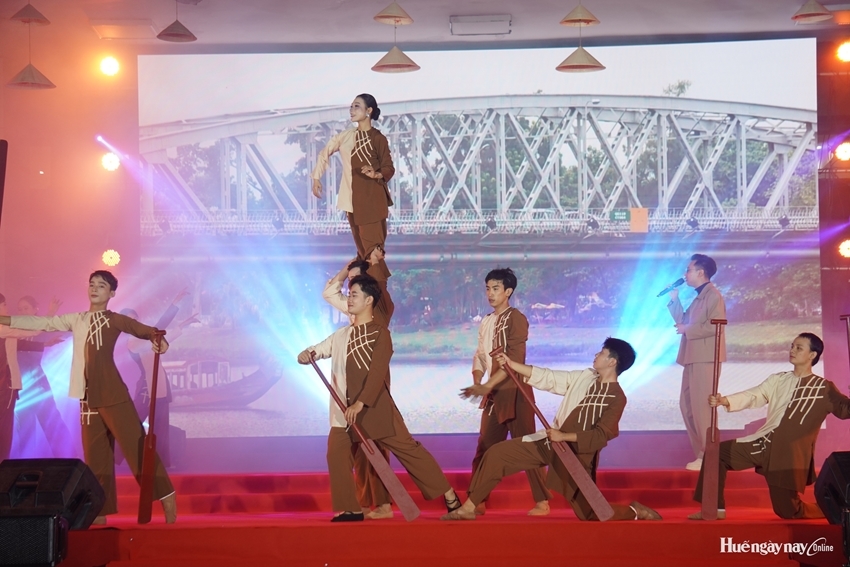
| Dancers from Hue Intermediate School of Culture and Arts |
Organised under the direction of Hue City Department of Culture, Sports and Tourism, the program was part of activities marking Vietnam Culture Day. More than a musical performance, “Tinh Khuc Hue” offered audiences an opportunity to revisit compositions that have helped preserve images of the Ancient Capital and its people in the memories of generations.
Hue has long been a source of inspiration for musicians. The beauty of the Huong River and Ngu Binh Mountain, the city's quiet streets, purple ao-dai, and traditional folk songs sung along the river have found their way into numerous compositions, each expressing different emotions. Some convey a deep longing for Central Vietnam, others evoke memories of Hue in days gone by, while others express a gentle affection for its landscapes and people. Over time, these melodies have not only remained part of the musical repertoire but have also become part of the cultural memory of those who love Hue.
The program featured 15 vocal, music and dance performances. It opened with ‘Khuc Tinh Ca Xu Hue’ (A Love Song of Hue), followed by lyrical songs such as ‘Mien Trung Thuong Nho’ (Longing for Central Vietnam), ‘Tieng Xua’ (Echoes of the Past) and ‘Goi Hue Trong Mo’ (Calling Hue in Dreams). Other compositions brought audiences back to familiar scenes of the ancient capital through ‘Mua Tren Pho Hue’ (Rain on Hue's Streets), ‘Nguoi Em Vy Da’ (The Girl from Vy Da), ‘Chieu Ni Ngoai No’ (An Afternoon Here and There), ‘Sau Co Do’ (Sorrow of the Ancient Capital), ‘Ngau Hung Hue’ (Hue Improvisation) and ‘Thuong Mai Cau Ho’ (Forever Cherishing the Folk Songs).
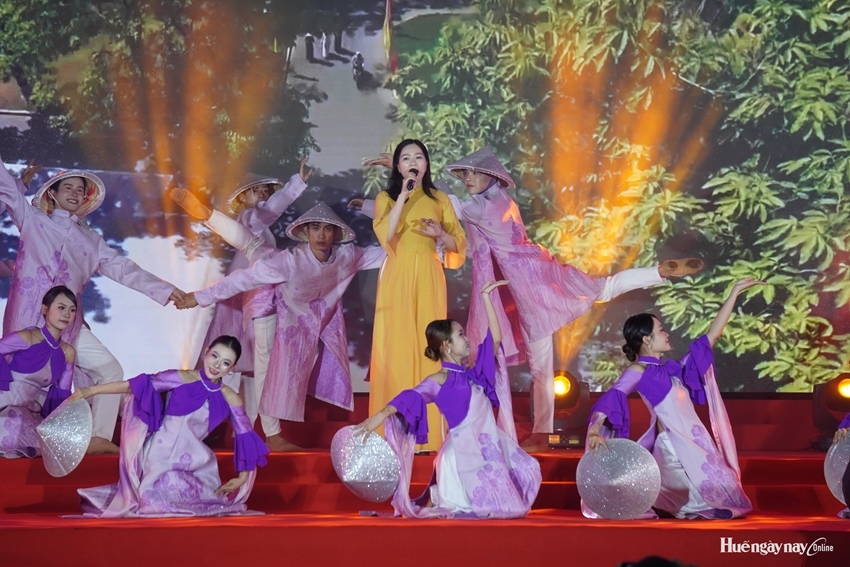 |
| The program featured 14 singers and 20 dancers |
Alongside songs that have remained popular over the years, the program included a dance performance entitled ‘Thanh Tien Det Nang’ (Thanh Tien Weaving Sunlight), evoking Hue's cultural beauty and traditional values. The performances combined singing with accompanying dance, bringing variety to the program while offering fresh interpretations of familiar works.
In particular, the songs ‘Hue Xua’ (Hue of the Past), ‘Rat Hue’ (Distinctively Hue) and ‘Hue Buon’ (Melancholy Hue) explored different shades of affection for the city. While some melodies evoked its gentle, poetic beauty, others expressed sadness, nostalgia and longing. The program concluded with ‘Hue Dang Hinh Que Huong’ (Hue, the Image of the Homeland), conveying affection for a land rich in cultural and artistic traditions.
By presenting musical compositions about Hue, the program helped foster a love for the homeland and an appreciation of cultural values passed down through generations. It also provided an opportunity for songs about Hue to continue being heard in contemporary life, reaching wider audiences, particularly younger generations.