



 |
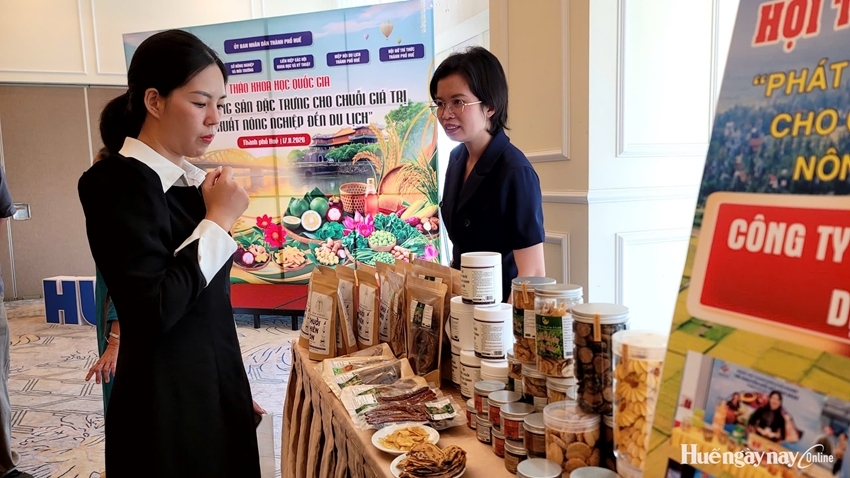
| Developing a cross-sector value chain based on signature agriproducts is among the topics discussed at the seminar |
Speaking at the seminar, Dr. Ho Dac Thai Hoang, Chairman of the City Union of Science and Technology Associations, said that local signature agriproducts serve as a foundation for connecting value chains from farms to heritage and cultural tourism, ecotourism, and community-based tourism experiences. He noted that making effective use of local resources, applying science and technology, and preserving traditional cultural values would not only increase the added value and competitiveness of agriproducts but also generate sustainable livelihoods for local communities and protect the ecological environment.
The seminar featured a diverse range of presentations by scientists, addressing topics such as policy development, the ‘four-party’ cooperation model, the application of science and technology, low-emission circular agriculture, experiential agricultural tourism, and community-based livelihoods. The presentations not only clarified both the theoretical and practical aspects of turning signature agriproducts into tourism offerings with multiple values but also put forward specific solutions tailored to the conditions of the city and other localities nationwide.
The seminar also focused on discussing four key areas. The first area concerned institutional frameworks and policies to strengthen the ‘four-party’ linkage, support cooperatives, and small and medium-sized businesses in brand name protection, geographical indications, and OCOP standardization for agriproducts associated with tourism. The second focused on science and technology and digital transformation. The third addressed circular agriculture and climate change adaptation, including technical solutions and green economic models that can be effectively replicated in practice. The fourth area covered tourism models and community livelihoods, with a focus on connecting agriproduct experiences, traditional craft village tourism, and community-based educational tourism. These efforts aim to preserve cultural and heritage identities while ensuring benefits for local farmers.
The research findings and proposed solutions presented at the seminar provided an important scientific basis for government agencies, businesses, and scientists to further develop and put into practice multi-value agricultural tourism models in the coming years.