



 |
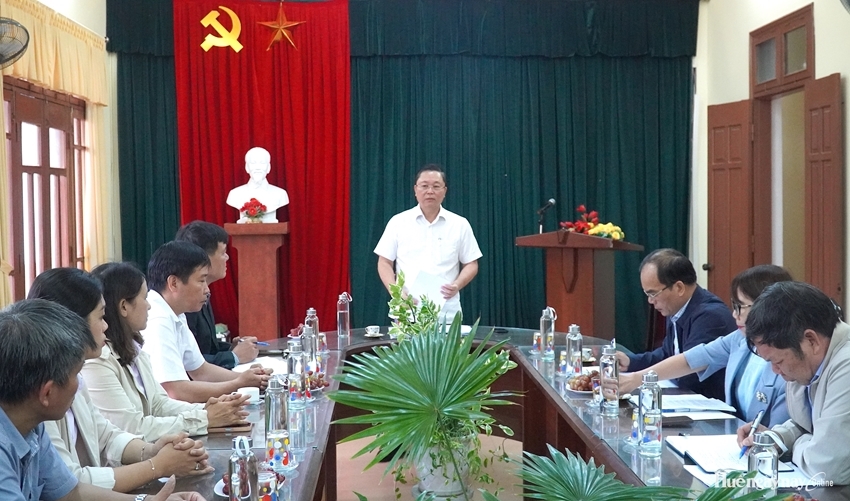
| Mr. Le Tri Thanh, Deputy Secretary of the City Party Committee and Chairman of the City People’s Committee, delivered a keynote speech at the working session |
Potential risk of localized water shortages
Reporting at the working session, Mr. Nguyen Van Hung, Director of the city's Meteorological and Hydrological Station, said that during the first 10 months of 2026, the station had regularly monitored and analyzed weather conditions, rainfall, and flood developments across the Huong and the Bo river basins, along with other key areas. It also conducted observations, forecasts, and warnings, and provided information to support disaster prevention and control, as well as socio-economic development. The Meteorological and Hydrological Station issued nearly 800 bulletins forecasting and warning natural disasters, including many on heat waves.
Regarding weather conditions in the final months of 2026, Mr. Nguyen Van Hung said that in November, apart from a widespread heavy rain forecast to last through November 12, one to two more spells of widespread or localized heavy rain may occur.
Total rainfall in November and December 2026 is forecast to reach only around 60 - 90% of the multi-year average. This trend could continue into the first months of 2027, posing a risk of localized water shortages.
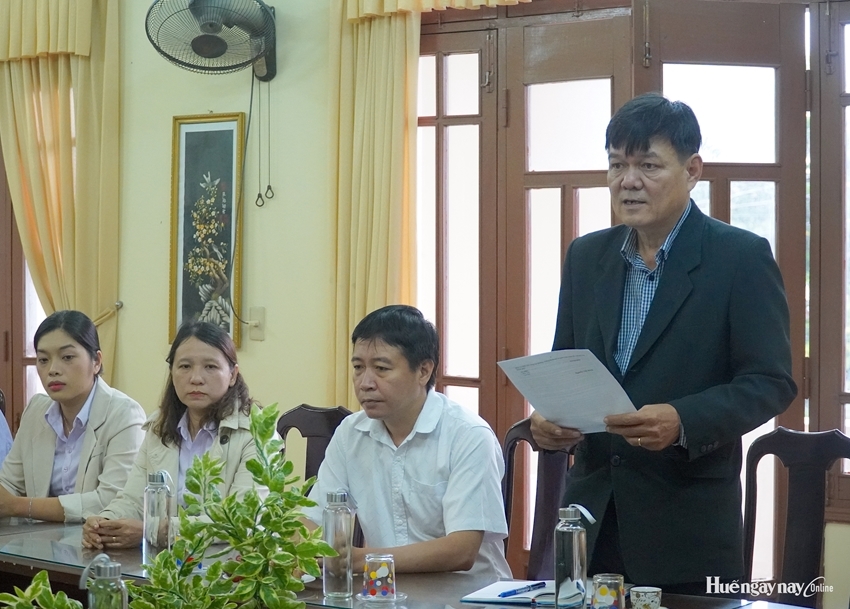 |
| Mr. Nguyen Van Hung, Director of the city’s Meteorological and Hydrological Station, reported on forecasting work in recent times |
Forecasts must specify each area at risk of natural disasters
In his concluding remarks, Mr. Le Tri Thanh emphasized that Hue has distinctive geographical and climatic characteristics, with its river systems, lagoons, coastal areas, and mountainous areas. Alongside the demands of urban, tourism, service, and cultural development, the city is facing increasingly complex impacts from climate change and natural disasters.
Therefore, meteorological and hydrological forecasts and warnings play an important role, serving both long-term planning and development and the direction and management of responses to emergency situations.
In particular, forecast bulletins should be specific to each area with different terrain and natural disaster risks. Priority should be given to forecasting heavy rain and flooding in the central urban area; issuing disaster warnings for coastal and lagoon areas; and identifying risks of flash floods and landslides in mountainous areas, especially A Luoi and the southwestern area of the city…
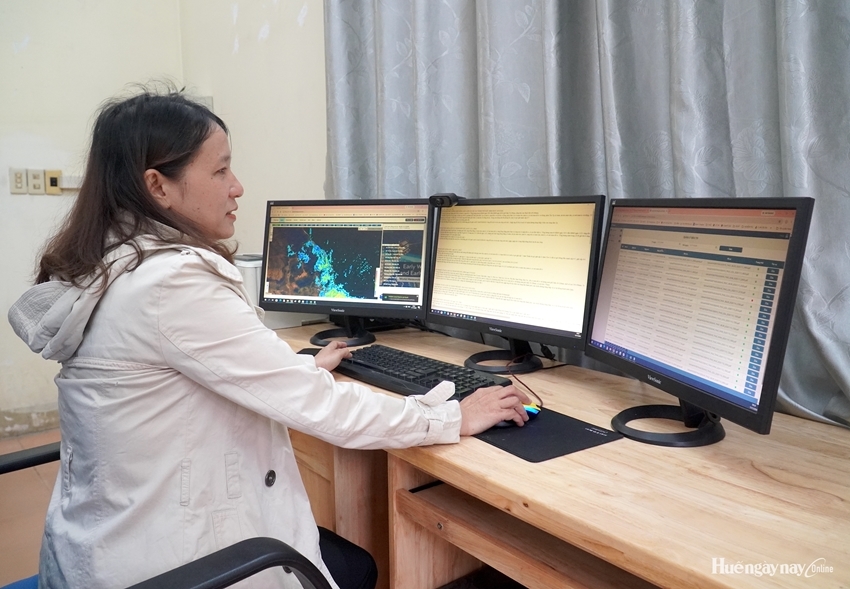 |
| An officer of the city’s Meteorological and Hydrological Station monitored and checked data to support meteorological and hydrological forecasting and warning activities |
Resources needed to upgrade equipment
The Chairman of the City People’s Committee also asked the city’s Meteorological and Hydrological Station to proactively build, store, and share long-term observation datasets, particularly covering periods of extreme weather events such as prolonged heatwaves, droughts, heavy rainfall, typhoons, and floods.
For reservoirs, irrigation works, and hydropower plants, the rainfall and flow monitoring stations and surveillance cameras at reservoirs, dams, and discharge outlets must be reviewed.
Regarding investment proposals, the Chairman of the City People’s Committee agreed on the need to provide resources for the city’s Meteorological and Hydrological Station to upgrade its equipment and technology. However, proposals must be based on actual needs, with clearly defined objectives, and on the efficiency of use and urgency so as to avoid scattered investment that fails to make effective use of the equipment and technology.