



 |
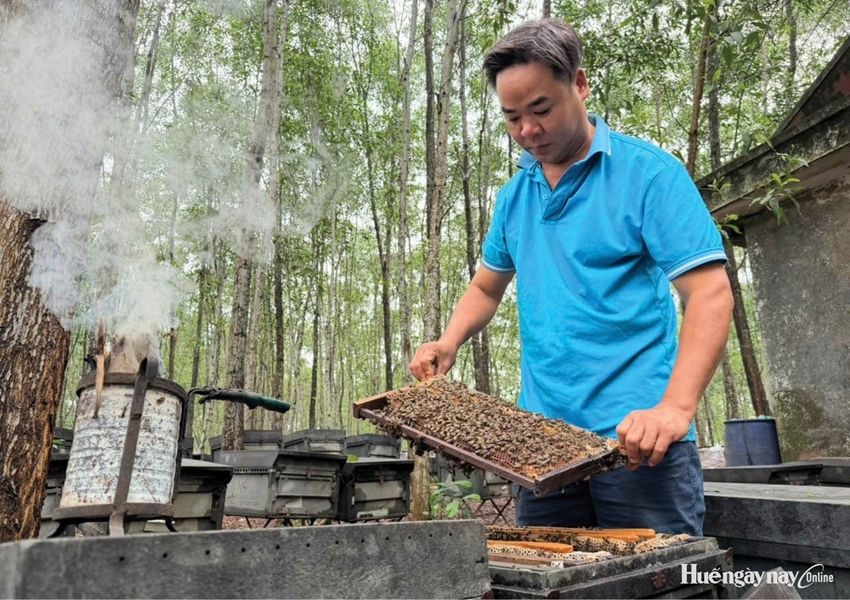
| Mr. Phan Thanh Luyen checks the beehives before the season's final harvest |
Following the floral season
On the edge of an acacia forest in Phu Bai Ward (formerly Duong Hoa Commune), an abandoned house has served as a shelter for Mr. Phan Thanh Luyen and his bee colonies for nearly three years. The old house provides a place to rest after hours of tending to the bees, giving him a spot to eat and live during long months away from home. Around the house, hundreds of beehives are arranged in rows, waiting for the honey extraction period. His life continues like this, bound to the acacia forest, following each blooming season and relocation trip in search of new honey sources.
Over the age of 45 and originally from Hung Yen province, Mr. Luyen has spent more than two decades as a nomadic beekeeper. Each year, around the third or fourth lunar month, he brings his colonies to Hue in search of acacia nectar. He only manages to return home to visit his wife and children for a few days a year; the rest of the time, he must remain at his campsite to tend to his bees. For him, this profession means accepting long periods away from home, living in makeshift conditions deep in the forest, and managing all aspects of daily life on his own.
The work of a beekeeper is not simply waiting for flowers to bloom and then gathering honey. According to Mr. Luyen, keepers must regularly inspect every comb frame, observing the honey volume in the cells and the wax coverage to determine the right extraction time. When wax covers about two-thirds of the frame, the colony can enter the harvest period. Each honey extraction cycle typically takes place about 10 to 15 days apart.
This year, the favorable acacia blossom season allowed the colonies to yield good honey. Traders are purchasing it at 23,000 to 25,000 VND per kilogram. After deducting expenses, each hive generates a profit of around 500,000 to 700,000 VND,” Mr. Luyen shared.
Mintaining 400 beehives, a favorable honey season provides him with extra income to cover expenses and save money to send back home for his family's living costs. However, earnings from beekeeping heavily depend on the weather, flower sources, and the yield of each harvest. To keep the colonies healthy, keepers must constantly monitor them, supplement their feed when flowers are scarce, and calculate the right timing to move camps.
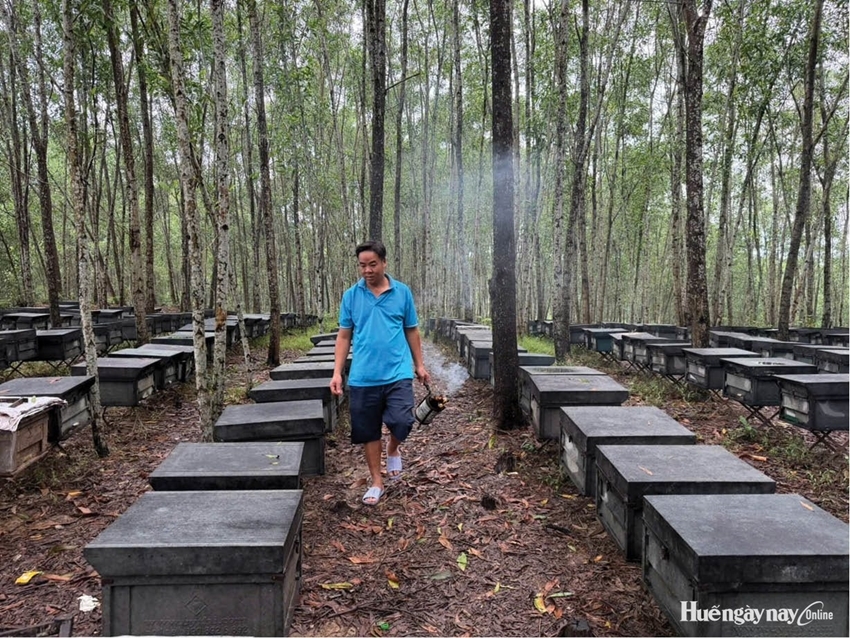 |
| Roughly six households practice nomadic beekeeping beneath the acacia forest canopy in the Duong Hoa mountains |
Bitterness behind honey season
Over a cup of afternoon tea, Mr. Phan Thanh Luyen recalled the 2023 flood with deep regret. At that time, his beekeeping camp was located in the mountainous area of Phu Son, Phu Bai ward, with more than 400 hives. Unexpectedly rising floodwaters swept away and damaged about half of the colonies. With each hive valued at around 700,000 VND, the lost property was estimated at approximately 140 million VND.
After the flood, Mr. Luyen had to start over from the remaining bee colonies he managed to keep, finding ways to rebuild the scale of his operation to stay in the trade. Thanks to the support of fellow beekeepers, he gradually rebuilt his hives. But not everyone was in a position to start from scratch. According to Mr. Luyen, during that same flood, four of his fellow beekeepers lost almost everything when most of their hives were swept away by the waters. Depleted of capital and unable to reinvest, they had to give up the trade and return to their hometowns to seek other livelihoods.
After everything they have been through, choosing a camp location is no longer based solely on flower sources. Keepers must also consider terrain and flood risks to minimize damage. Accepting a location with fewer flowers but greater safety is a lesson Mr. Luyen and his peers have drawn from real-world experience. For them, preserving the bee colonies through the storm season is just as important as a high-yield honey harvest.
About 500 meters from Mr. Luyen’s camp, Mr. Nguyen Van Long, a native of Phu Tho province, is also busy tending to his bee colonies. Beneath a temporary tent, he takes the opportunity to mix soybeans and cane sugar as supplemental feed for the bees. With around 400 hives currently maintained, this is a routine task, especially when flower sources are insufficient for the bees to forage on their own. Mr. Long shared that the cost of this supplemental feed alone reaches about 30 million VND per month.
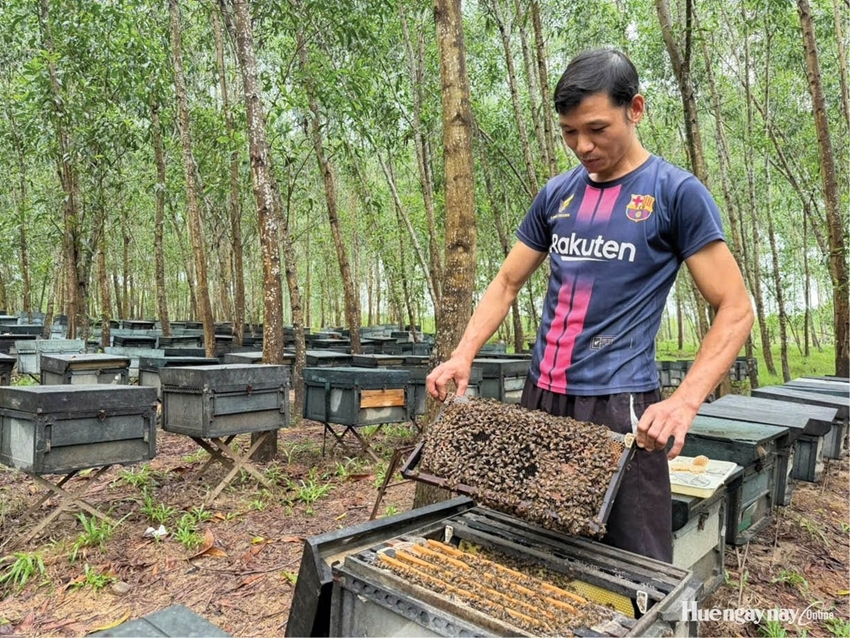 |
| Mr. Nguyen Van Long places feed into the hives during the colony nourishment period |
That expense poses no small pressure on beekeepers, especially when honey yields and selling prices are unstable. During times when flower sources are scarce, keepers must still supplement feed to maintain their colonies. If the harvested honey is meager or prices fall low, earnings may not suffice to cover costs. Yet the bee colonies require continuous care, regardless of whether the keeper is turning a profit or facing hardships.
Beyond natural disasters and feed costs, beekeepers also fear their colonies dying or weakening when exposed to pesticides in agricultural production areas. Therefore, despite investing significant effort and capital, they can hardly predict the outcome of each honey season. “This trade carries many risks, but we have been doing it for many years. Now, if we don't raise bees, we don't know what else to do, so we just have to try our best to hold on to the profession,” Mr. Long shared.
For those who have been attached to the trade for many years, their experience and capital are all tied up in their bee colonies. Quitting the trade means having to find a new job, while continuing to pursue it means accepting uncertain seasons.
For Mr. Luyen, Mr. Long, and their fellow keepers, keeping the bee colonies safe, having honey to sell, and saving some money to send back to their families are joy enough after long months at the camp. As flower sources shift, the beehives are packed up once again and moved to new lands, carrying with them the hope of a favorable, sweet honey season.