



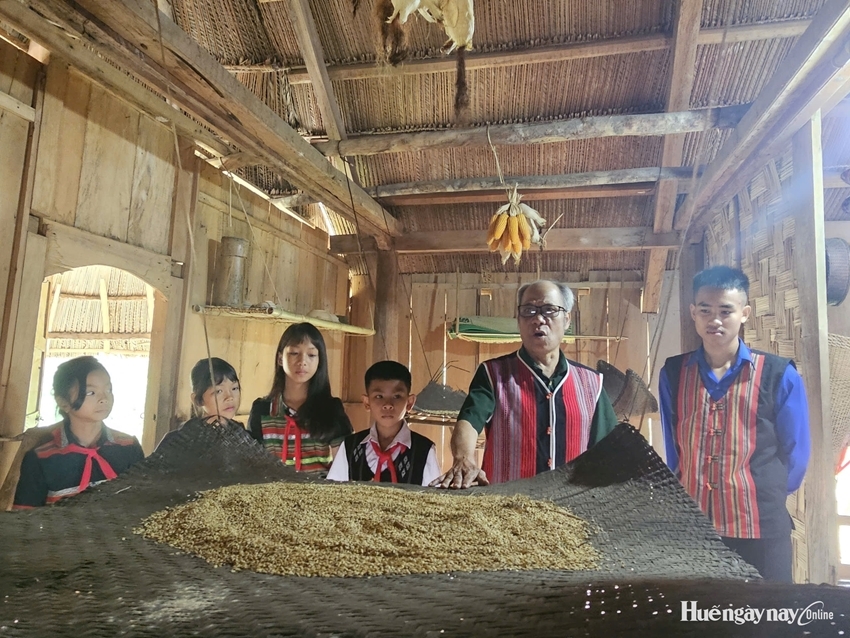
 |
| The interior of a traditional Moong house of the Pa Co people |
On the morning of August 5, the Department of Culture and Sports, in collaboration with the People’s Committee of A Luoi 1 Commune, held a ceremony to announce the decision and present the certificate recognizing the traditional Moong house of the Pa Co people as a city-level historical site.
Leaders of local departments, agencies, and authorities, along with a large number of Pa Co people, attending the ceremony and joining the festival inside the Moong house
In Pa Co community life, the Moong house is where village elders, village heads, and residents gather. It also serves as the setting for traditional rituals and festivals, weddings, cultural and artistic activities, and many other important community events.
It is within this very space that older generations pass on to the younger generation their knowledge of traditional livelihoods, customs and practices, stories of their origins, and the moral philosophy that guides relationships within the family, clan, and community.
Therefore, beyond a traditional architectural work, the value of the Moong house is also expressed in the living cultural space that has been shaped and enriched over generations. Within this space, tangible and intangible heritage are inseparably intertwined, reflecting the life, spirit, knowledge, and distinct cultural identity of the Pa Co people.
The Moong house also bears profound historical significance. During the wars of resistance to defend the nation, many Moong Houses of the Pa Co people served as meeting places, storage sites for food supplies, shelters for revolutionary cadres, and bases for revolutionary activities.
Over time, due to the impact of war and socio-economic changes, many traditional Moong houses have not been preserved in their original condition. In response, with the support of authorities at all levels, the dedication of village elders and artisans, and the collective efforts of the local community, the traditional Moong house in A Nam Village, A Luoi 1 Commune, was reconstructed in 2013 using traditional materials such as wood, bamboo, rattan, and leaves.
According to the leaders of A Luoi 1 Commune, the restoration of the Moong house is of great significance. It not only restores a traditional architectural structure but also revives a shared cultural space, allowing the Pa Co people’s customs, rituals, cultural and artistic activities, and folk knowledge to continue to be practiced and passed down from one generation to the next.
The official designation of the traditional Moong house of the Pa Co people as a city-level historical site is a recognition of its outstanding historical, cultural and architectural values. It also places an even greater responsibility on us to preserve and pass on these invaluable values to future generations.
Also in the morning of the same day, Hue Museum of History, in coordination with the People’s Committee of A Luoi 1 Commune, held an inaugural ceremony and officially handed over an exhibition recreating the traditional Moong house of the Pa Co people.
Featuring nearly 100 documents, photos, and artifacts, the exhibition comprehensively and vividly recreates the displays found in the traditional Moong House. The overall exhibition layout is harmoniously designed, creating distinctive highlights while ensuring historical accuracy and scholarly integrity.
The exhibition was subsequently handed over by Hue Museum of History to the local authorities for management, preservation, and operation to further promote its role in traditional education and the development of culture and tourism in A Luoi.
The following are a series of photos taken by Hue Today Online:
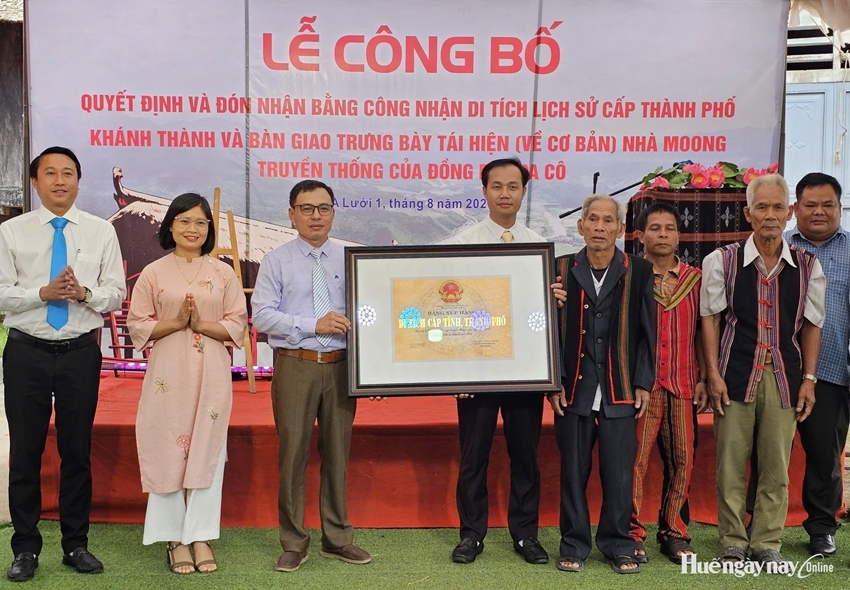 |
| Leaders of Hue City Department of Culture and Sports presenting the certificate recognizing the traditional Moong house of the Pa Co people as a city-level historical site |
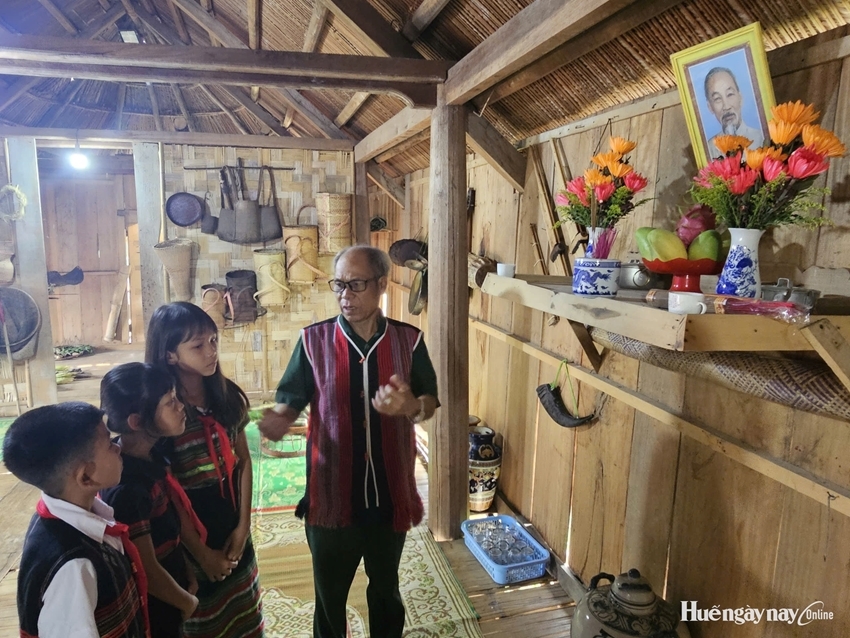 |
| At the center of the Moong House is an altar dedicated to President Ho Chi Minh |
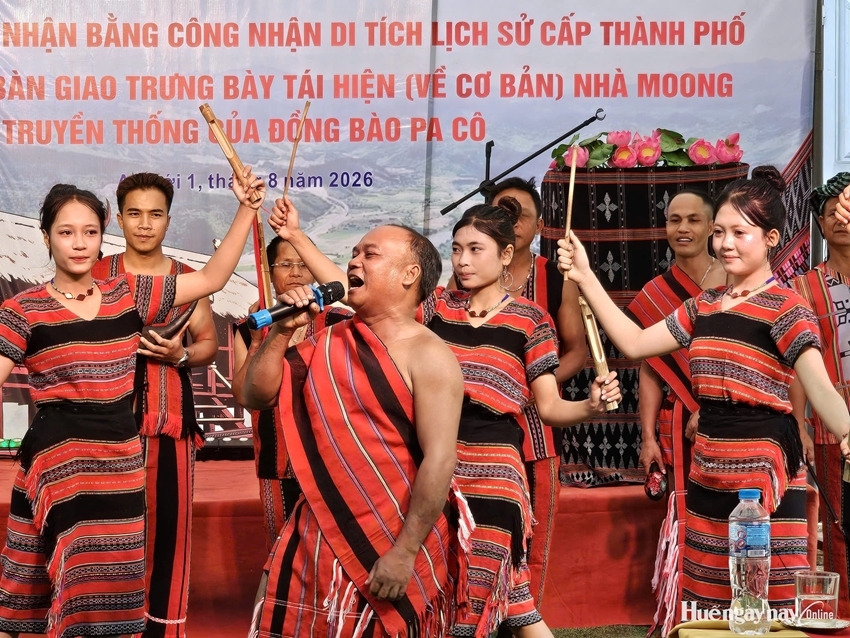 |
| Pa Co people performing traditional dances during the celebration marking the designation of the Moong House as a city-level historical site |
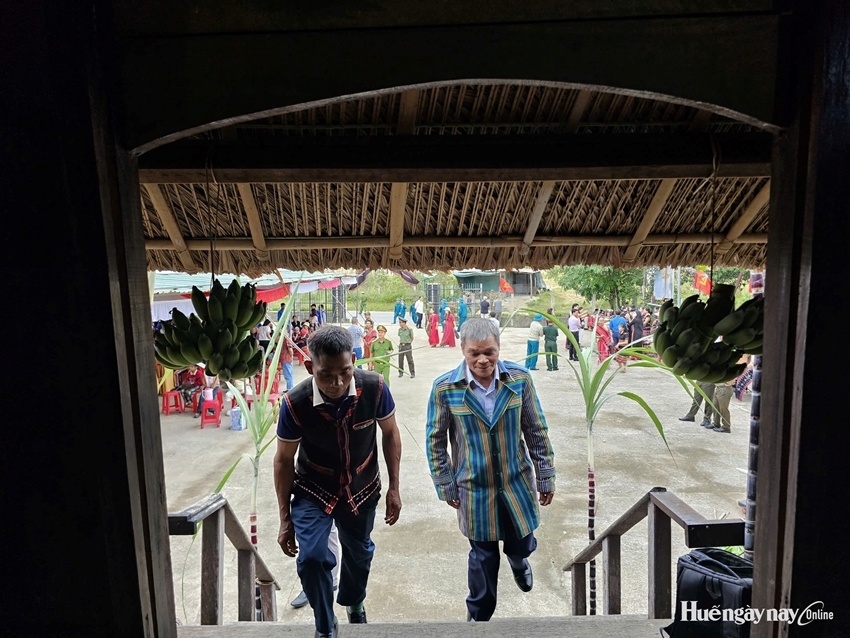 |
| The traditional Moong house is a unique folk architecture that is closely associated with the formation and development of the Pa Co community in the Truong Son Mountain Range |
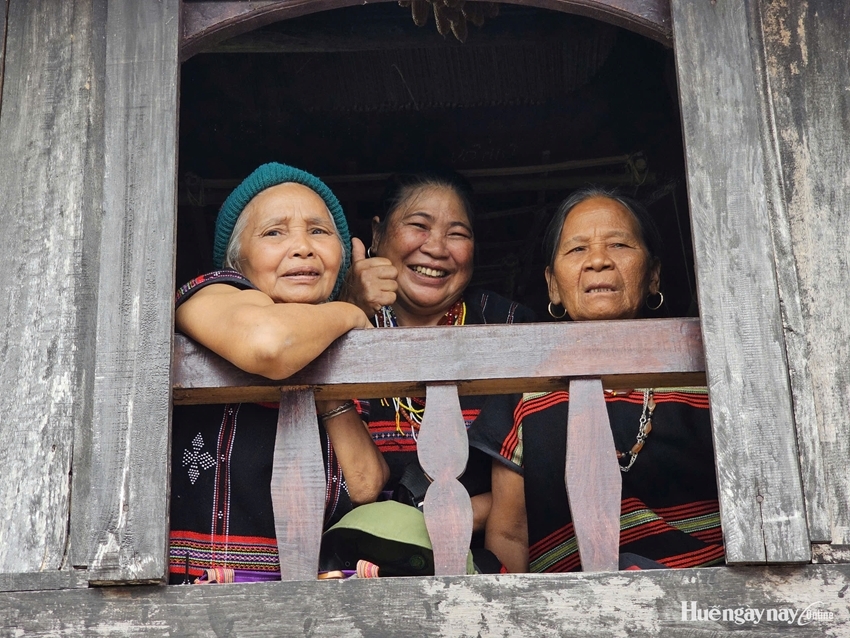 |
| Pa Co women inside the Moong house |
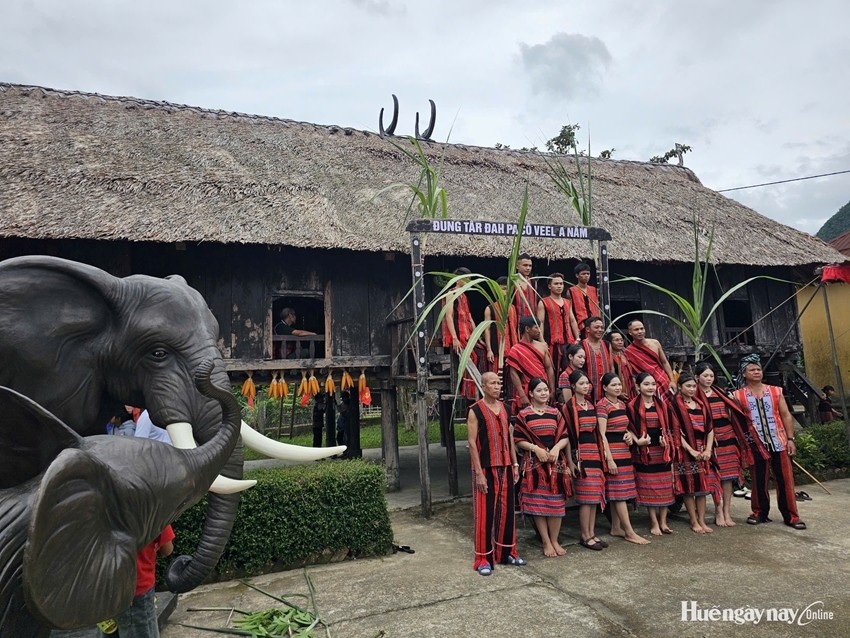 |
| The traditional Moong house in A Nam Village, A Luoi1 Commune, was reconstructed in 2013 using traditional materials such as wood, bamboo, rattan, and leaves |
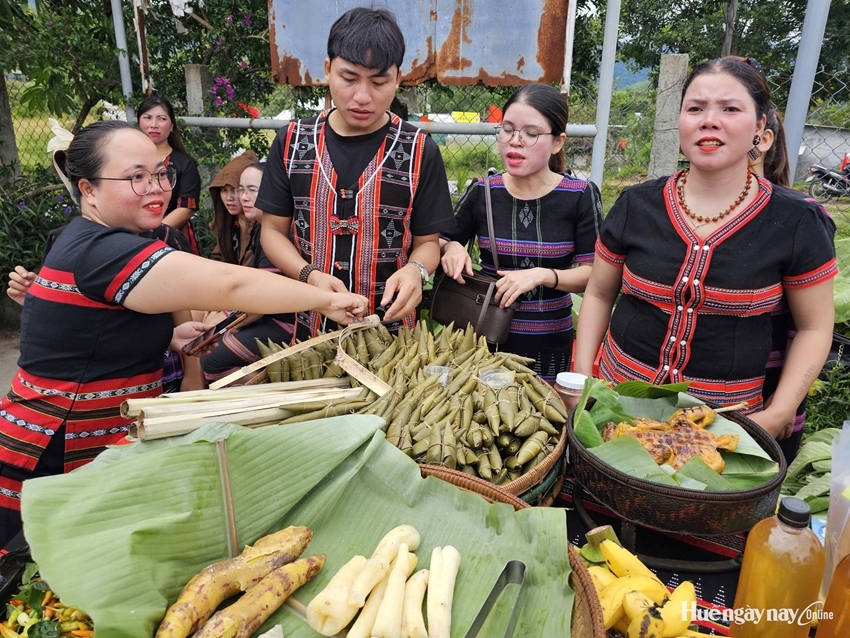 |
| Pa Co people serving their guests a variety of traditional specialties |
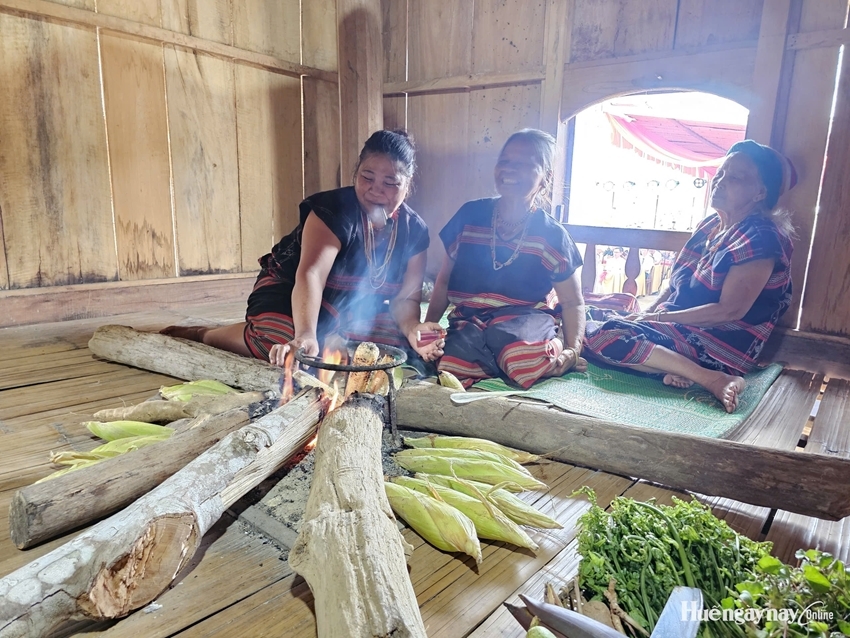 |
| The hearth inside the traditional Moong house |
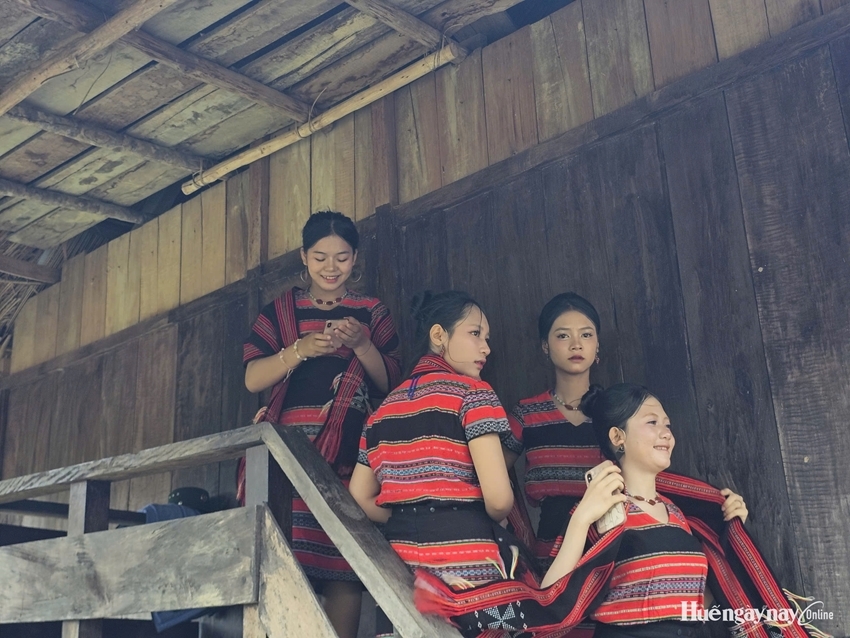 |
| Pa Co girls on the walkway leading to the traditional Moong house |