



Mr. Jeong Yun-geom, a representative of Post Media (South Korea), made this point while discussing heritage conservation at the conference themed “Conservation and promotion of cultural heritage values: International experiences and practices”, held in Hue City on July 18.
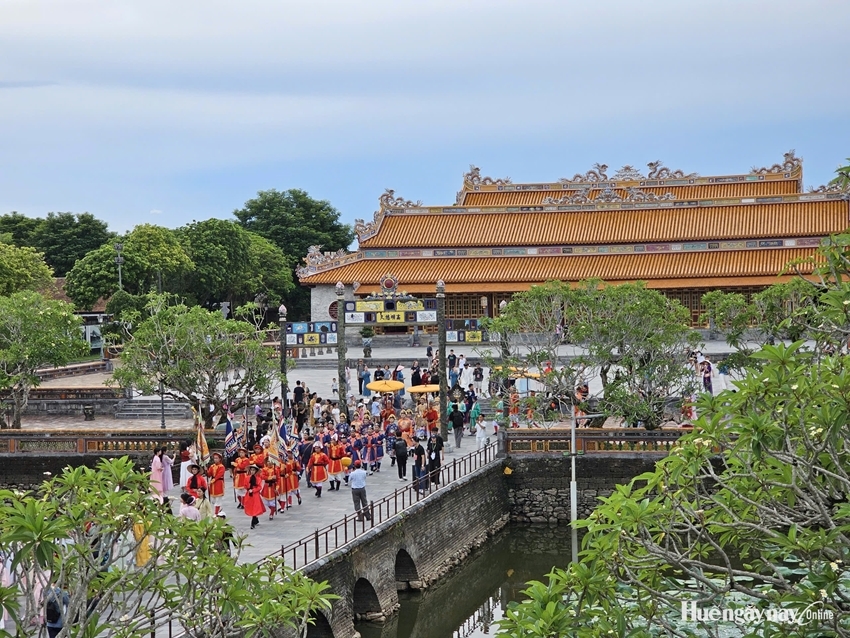 |
| Hue’s heritage stands at the threshold of smart transformation and the digital economy |
The conference was organized by the University of Sciences, Hue University, in coordination with the University of Social Sciences and Humanities (Vietnam National University, Ho Chi Minh City), the University of Social Sciences and Humanities (Vietnam National University, Hanoi), and Hanoi National University of Education. It brought together a large number of domestic and international experts and scholars, who presented papers at the event.
Digitizing heritage in the age of AI
Mr. Jeong Yun-geom outlined South Korea’s future strategy, which is built upon AI, data, and sustainable development, in which, all heritage data are managed and utilized within a unified ecosystem. The strategy’s vision is to build a highly adaptive national heritage system that opens up the future through smart transformation and the digital economy.
To achieve this, South Korea has set out 4 core strategies, including: smart innovation, building a sustainable heritage environment, promoting the digital economy, and developing a digital heritage ecosystem.
Citing the example of ‘digital repatriation’, Mr. Jeong Yun-geom noted that due to historical upheavals, many artifacts remain scattered across various countries, and bringing them home remains difficult. To address this, South Korea uses gigapixel, multispectral, and infrared imaging to digitize artifacts held in museums abroad, then feeds this data into the national heritage management system.
“The value of this model lies not only in digitizing artifacts, but also in expanding access to heritage and strengthening cultural diplomacy,” emphasized Mr. Jeong Yun-geom.
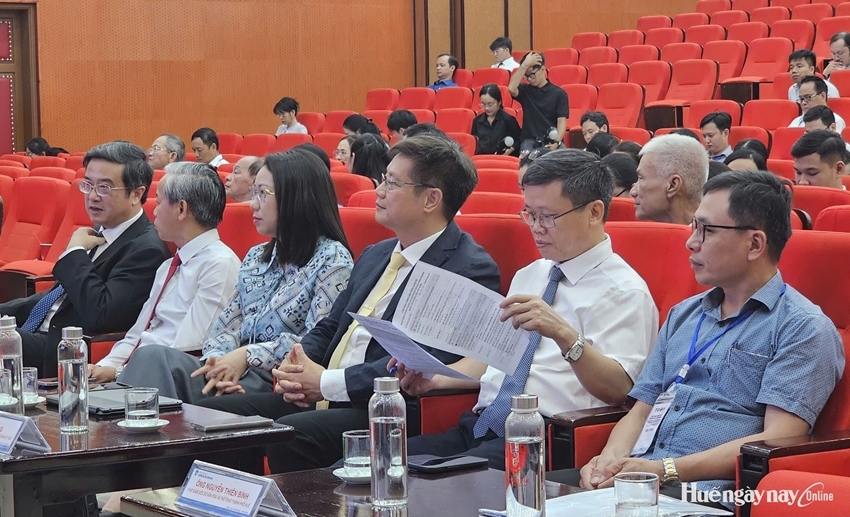 |
| Delegates attended the conference |
Drawing on South Korea’s experience, Mr. Jeong Yun-geom proposed three directions for building a smart heritage city in Hue City.
Firstly, building smart data infrastructure for the Nguyen Dynasty archives, ensuring Vietnam’s data sovereignty and intellectual property rights. Once the vast archival collection of the Nguyen Dynasty is converted into AI-ready data and linked into a unified system, Hue will have a foundation for managing its heritage data while promoting the value of Vietnam’s intellectual assets without depending on global technology platforms.
Secondly, deploying a smart prevention and management system to respond to climate change, particularly the risk of flooding along the Huong River. Building an AI-integrated drone monitoring system will help shift from post-incident response to proactive prevention, moving toward a heritage environment that is safe and resilient against predictable risks.
Thirdly, creating new values to address the challenge of restoring architectural structures that have been lost. Digital restoration through technology should be prioritized before physical restoration, then visualized through VR and XR experiential content. This approach not only ensures the authenticity of heritage, but also maximizes its tourism and cultural value, laying the groundwork for harmonious development between conservation and development in Hue City.
Heritage as a driver of economic development
The conference also raised numerous questions among experts: How can heritage be digitized while preserving authenticity? How can cultural tourism be developed without commercializing traditional values? How can conservation and development, traditional value and the demand for innovation, be harmonious? These are questions not only for Vietnam but a shared concern among many countries around the world.
This view has continued to be consistently developed by our Party across successive Congresses, particularly through the Resolution No. 80-NQ/TW dated January 7, 2026, issued by the Politburo, and the Documents of the 14th National Party Congress, with thinking on cultural development becoming increasingly refined. Culture is identified as the spiritual foundation of society, an internal strength, a strategic resource, and the nation’s soft power; investing in culture is investing in the country’s sustainable development.
The year 2026 marks a deeply significant milestone, with the National Assembly deciding to designate November 24 each year as Vietnam Culture Day. This is not only a recognition of culture’s enormous role in the cause of national construction and defense, but also a reminder to every Vietnamese person of the responsibility to preserve, pass on, and promote the nation’s cultural values in the new era.
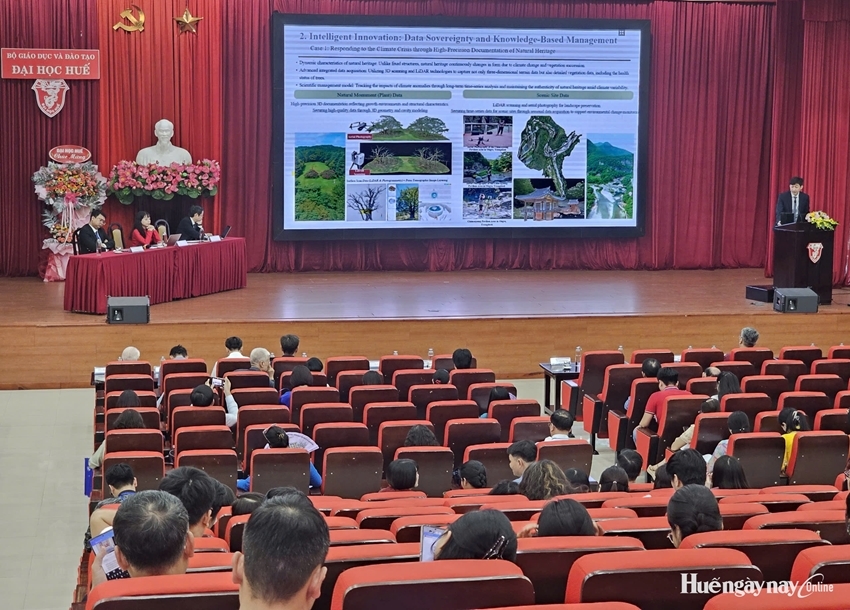 |
| Delegates presented papers at the opening session |
The conference was held in Hue at a particularly meaningful moment. Hue is where the finest elements of Vietnamese culture converge, home to the country’s most distinctive system of cultural heritage, including several sites inscribed by the UNESCO. Since becoming a centrally-governed municipality, Hue has entered a new phase of development, aspiring to become Vietnam’s signature heritage city and a cultural hub for the region.
“On this journey, heritage is not only an asset of the past, but also a resource for the future. It should not only be preserved to safeguard the nation’s memory, but also be promoted as a driving force for economic development, tourism, cultural industry, education, and innovation,” said Assoc. Prof. Dr. Vo Thanh Tung, Rector of the University of Sciences, Hue University.