



 |
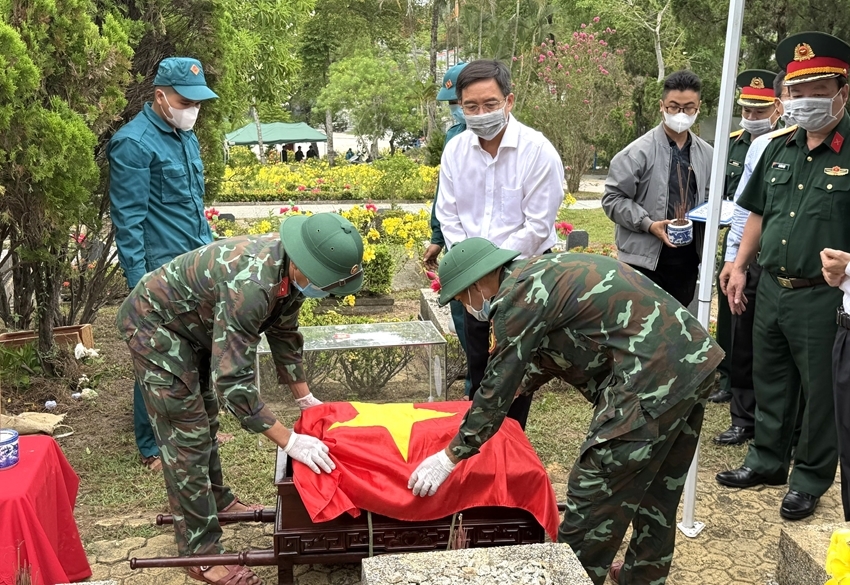
| City Party Secretary Nguyen Dinh Trung personally inspects the biological sample collection process at the Hue City Martyrs' Cemetery |
The delegation also included members of the Standing Committee of the City Party Committee: Hoang Khanh Hung, Head of the Party Committee's Commission for Publicity, Education and Mass Mobilization; and Senior Colonel Le Hong Viet, Political Commissar of the Hue City Military Command and Deputy Head of the City's Steering Committee 515.
Hue City Martyrs' Cemetery is one of the largest sites in the area requiring DNA sample collection, with 1,456 graves of unidentified martyrs. In pursuit of the sacred mission of restoring the identities of these fallen heroes, the Hue City Military Command has worked closely with local authorities to establish specialized task forces under the ‘500 days and nights campaign to intensify the search, recovery, and identification of martyrs' remains’.
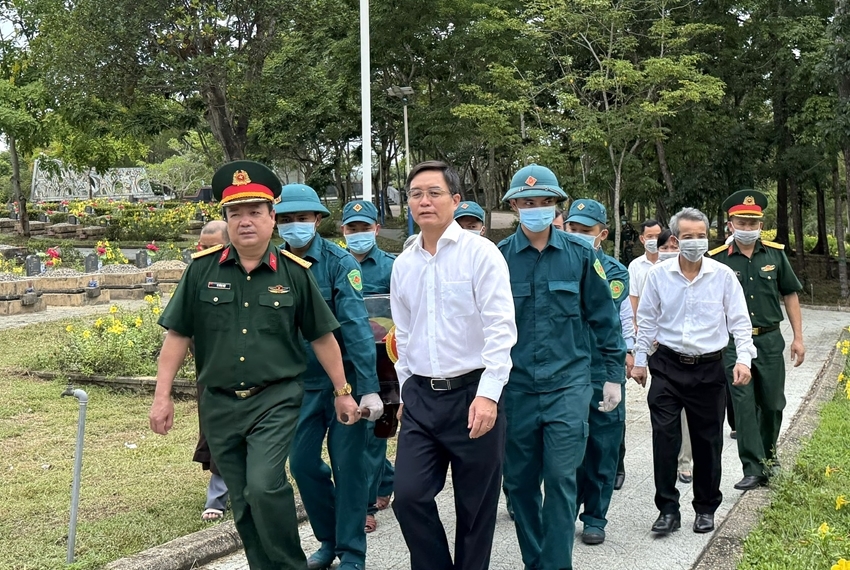 |
| City leaders personally return the martyrs' remains to their burial sites after the biological samples have been collected |
After more than 20 consecutive days and nights of work (from June 16 to July 10), despite the intense summer heat, soldiers and specialized personnel have completed the exhumation process for 656 of the 1,456 graves. Of these, approximately 500 biological samples met the requirements for DNA testing. The teams are striving to complete the entire campaign by mid-August 2026.
During his on-site inspection, Secretary Nguyen Dinh Trung expressed confidence in the systematic and professional procedures being followed. He also commended the strong sense of responsibility and selfless dedication demonstrated by the officers, soldiers, and all personnel involved.
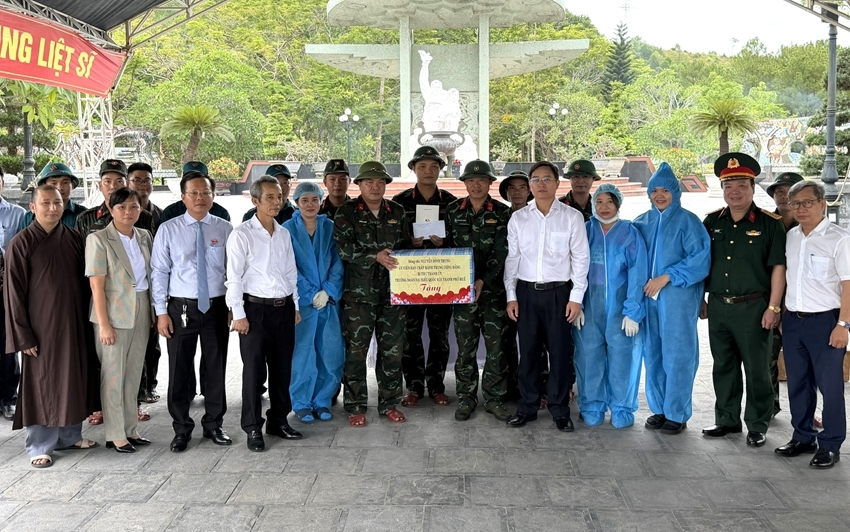 |
| City Party Secretary Nguyen Dinh Trung and city leaders present gifts to encourage the personnel carrying out the mission |
The City Party Secretary emphasized that every successfully collected DNA sample represents far more than a statistic in a report; it is a new ray of hope and a bridge connecting the present with the past. Each sample is a key to restoring the identities of the fallen, answering the decades-long hopes of thousands of martyrs' families across the country. This work is not only a political responsibility but also a sacred duty that embodies the enduring traditions of ‘remembering those who made sacrifices’ and ‘repaying the debt of gratitude’ of the Party, the State, the Armed Forces, and the People for those who gave their lives in defense of the Nation.
Acknowledging the difficult weather conditions expected in the coming weeks, Secretary Trung urged all participating forces to maintain their strong sense of responsibility, overcome every hardship, and carry out the work with the utmost care and reverence. The ultimate goal is to complete the mission successfully and help the nation's heroic martyrs regain their names, reunite symbolically with their hometowns, and return to the embrace of their families.
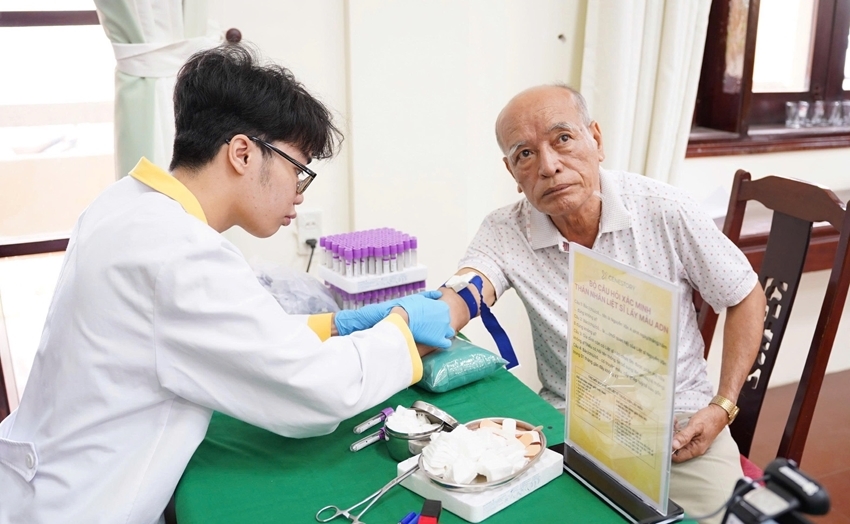 |
| Collecting DNA samples from the relatives of martyrs |
On the same day, the People's Committee of Phong Dien Ward, in coordination with a task force from the Hue City Police, launched a peak campaign to collect DNA samples from relatives of martyrs in Phong Dien, Phong Thai, Phong Dinh, and Phong Phu Wards.
To ensure the campaign proceeds efficiently, local authorities reviewed and compiled lists of family members, coordinated with the police to update information in the National Population Database, issued invitations, and instructed families to prepare the necessary documentation before the sample collection.
The Hue City Police, together with ward-level police and specialized units, are responsible for updating records, guiding participants through procedures, and collecting DNA samples in accordance with technical standards to ensure safety, accuracy, timeliness, and data confidentiality. Meanwhile, local authorities, the Vietnam Fatherland Front, and mass organizations have mobilized youth volunteers to assist with public outreach, information registration, and support for participants throughout the process. According to the plan, the campaign will collect more than 480 DNA samples from martyrs' relatives to support efforts to identify the remains of the fallen heroes.