 |
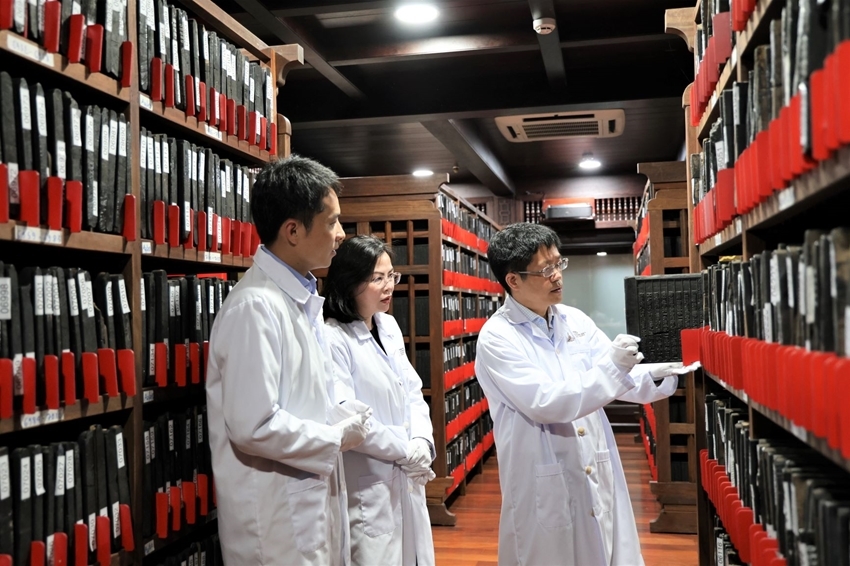
| Inside the Nguyen Dynasty Woodblocks repository at National Archives Center No. IV in Da Lat |
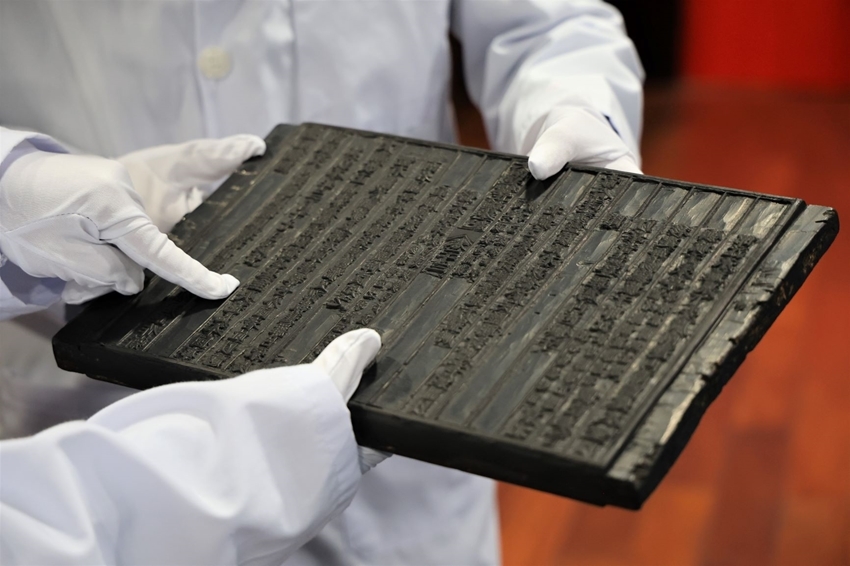
The Nguyen Dynasty Woodblocks constitute a unique type of document in terms of their forms, contents and production techniques. They are the original printing blocks used for the publication of many of Viet Nam's official historical records and imperial texts, most of which were compiled and engraved during the Nguyen Dynasty. The woodblocks were primarily produced by reverse carving Han-Nom characters onto wooden boards for printing books, a technique widely used during the feudal period, and has been preserved to the present day.
In 1802 (Year of the Dog), the Nguyen Emperors attached great importance to the compilation of official history, believing that historiography could contribute to maintaining social stability, fostering national unity, and thereby strengthening both the prestige of the imperial lineage and the position of the dynasty. In 1811 (Year of the Goat), Emperor Gia Long established the Historiography Office, the predecessor of the National Historiography Office, and issued an imperial edict stating: “In compiling the Veritable Records of Dynasty, all historical events must be extensively examined and verified to provide reliable references”.
Shortly after ascending the throne in 1820 (Year of the Dragon), Emperor Minh Mang ordered a search for surviving documents and established the National Historiography Office. This institution was entrusted with the important responsibility of compiling, engraving, printing and preserving the official imperial histories and texts. During its more than one hundred years of existence, the National Historiography Office compiled numerous valuable works, including Dai Nam Thuc Luc, Kham Dinh Viet Su Thong Giam Cuong Muc, Dai Nam Nhat Thong Chi, Minh Menh Chinh Yeu, together with many other important historical works.
The collection of Nguyen Dynasty Woodblocks currently preserved at the National Archives Center No. IV consists of 33,976 woodblocks, provisionally classified into more than 100 titles covering a wide range of subjects, including history, geography, politics and society, military affairs, legal institutions, culture and education, religion, ideology and philosophy, language and scripts, and literature. It constitutes a reliable and relatively intact historical source of materials for research, comparison, serving the study of Vietnamese history in many fields.
The repository housing the Nguyen Dynasty Woodblocks was constructed on a hill within the grounds of the Tran Le Xuan Palace. This location has an elevated terrain, convenient transportation access, stable geological conditions, efficient drainage, and long distance from the areas susceptible to fire hazards or environmental pollution. The repository was designed with a double-wall structure, forming a ‘repository-within-a-repository’ system.
Looking back through history, the decision to relocate the woodblocks from Hue to Da Lat in 1960 was explained by the Hue Museum - the institution responsible for preserving the collection at that time as follows: ‘With Da Lat's year-round dry climate, books, historical documents, and especially the woodblocks, could be preserved for the long term’. The relocation was an extremely meticulous undertaking and had to be carried out in several stages.
Today, the Nguyen Dynasty Woodblocks are preserved in specialized archival storage rooms at the National Archives Center No. IV. The entire collection is arranged on shelving units and secured in place with document supports. The woodblocks are organized by subject, including history, geography, culture, and military affairs, etc. The repository is equipped with temperature and humidity monitoring devices to continuously inspect, monitor and maintain optimal conditions, thereby extending the lifespan of this documentary collection.
The following are some photos taken at the Nguyen Dynasty Woodblocks Repository:
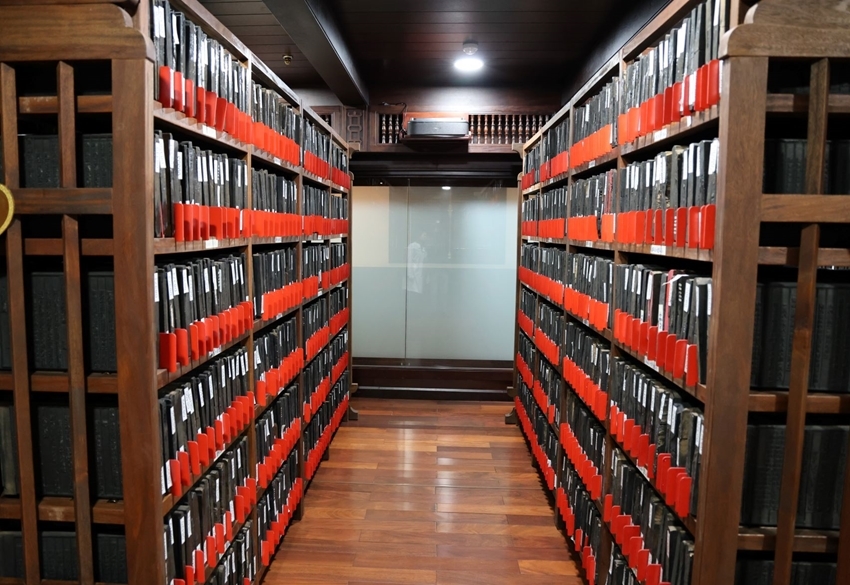 |
| The Nguyen Dynasty Woodblocks collection is currently preserved at the National Archives Center No. IV comprises 33,976 woodblocks |
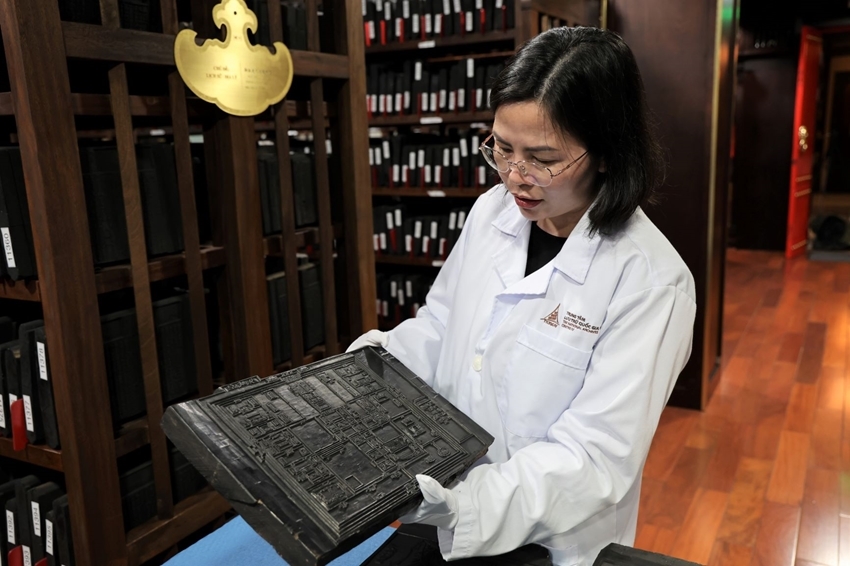 |
| The woodblocks are classified into numerous categories covering history, geography, politics and society, military affairs, legal institutions, culture and education, religion, ideology and philosophy, language and scripts, and literature |
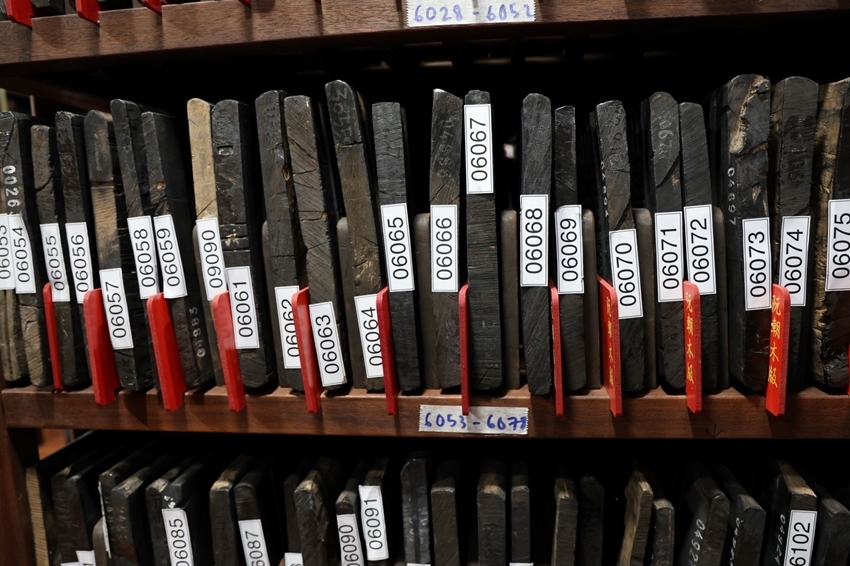 |
| Each woodblock is classified and assigned an ID number for preservation management |
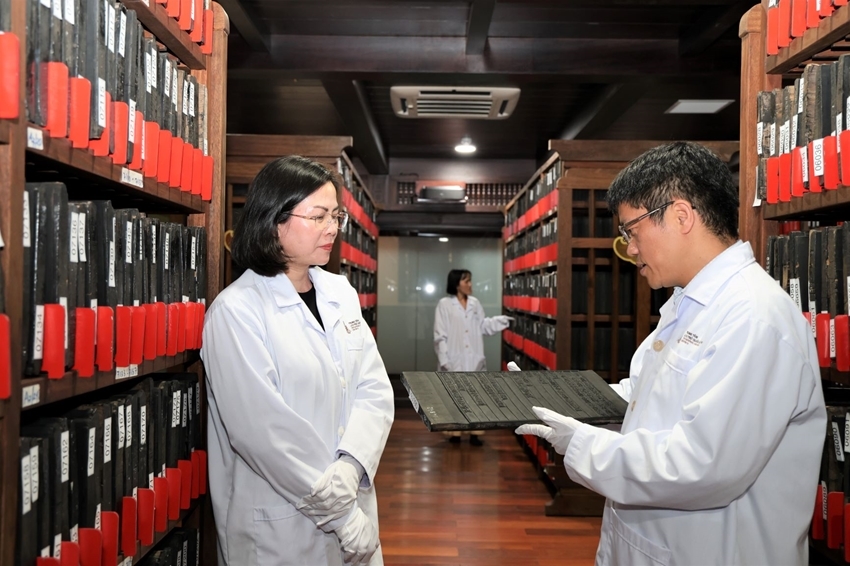 |
| The Nguyen Dynasty Woodblocks are a unique type of document in terms of their form, content, and production techniques |
 |
|
Woodblocks were primarily created by reverse carving Han–Nom characters onto wooden blocks for printing books during the feudal period.
|
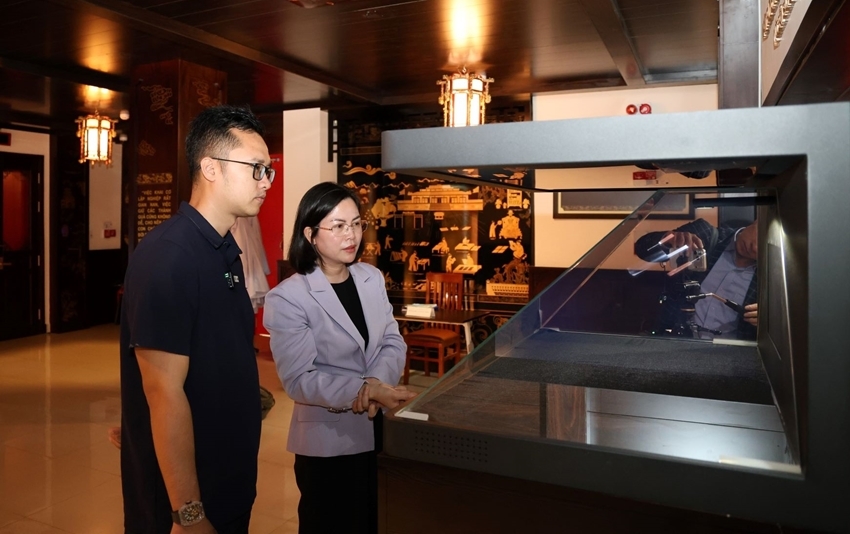 |
| Visitors explore the exhibition space showcasing modern technological applications |
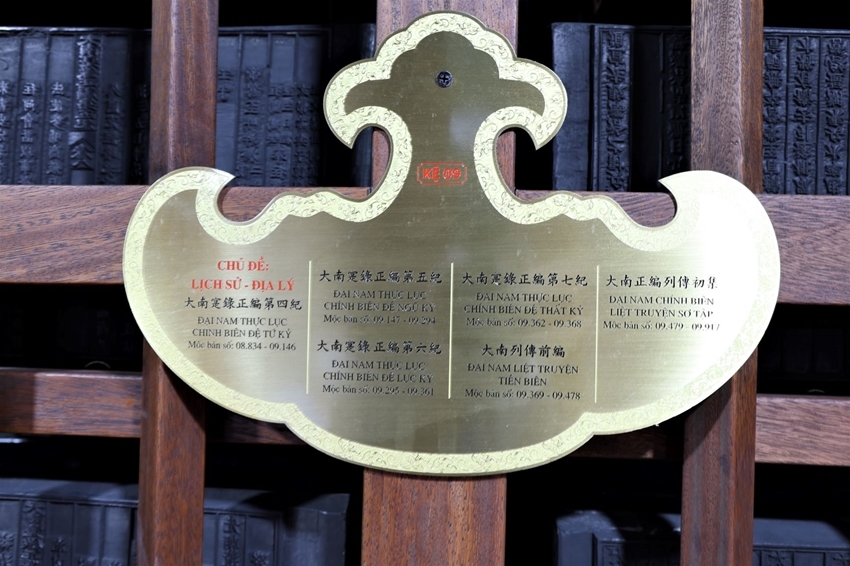 |
| Each storage shelf is assigned a shelf number, together with the corresponding subject category |
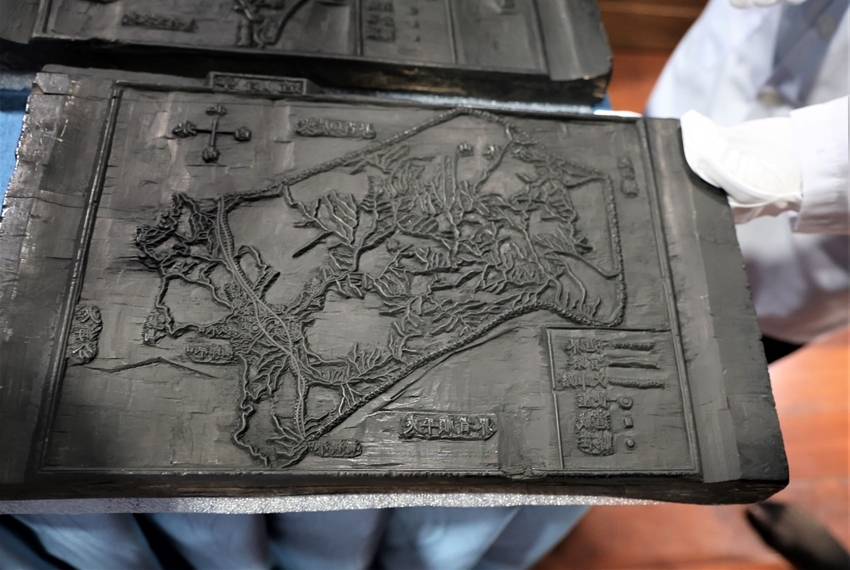 |
| The Nguyen Dynasty Woodblocks can be considered a reliable and relatively intact historical source of materials for research and comparison in the study of Vietnamese history across many disciplines |
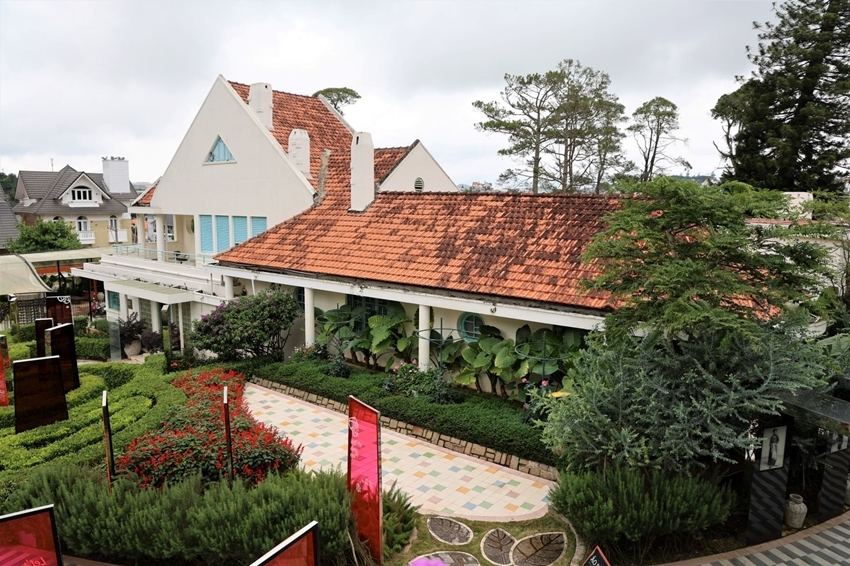 |
| Tran Le Xuan Palace, where the Nguyen Dynasty Woodblocks repository is stored |
Story and photos: D.Dong - N. Minh


