



 |
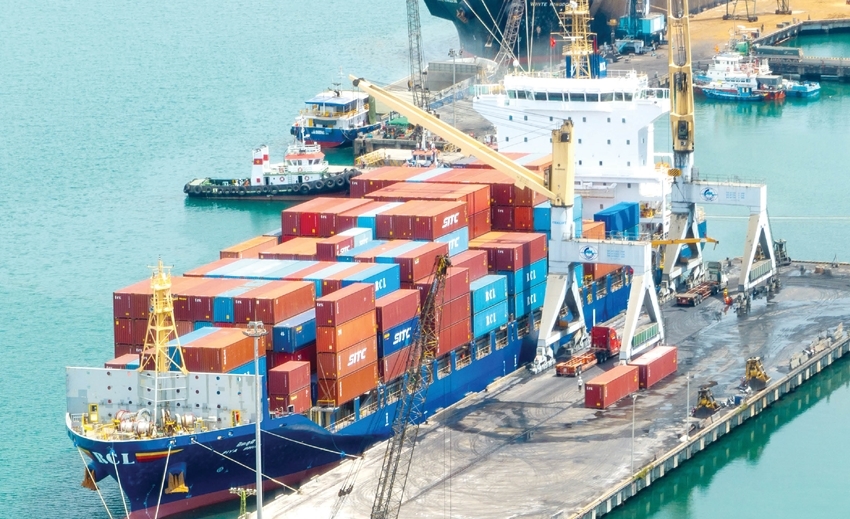
| Cargo loading and unloading at Chan May port |
A driving force for regional connectivity
With its central location in the Central region, Hue City benefits from a diverse and synchronized transportation system from road, railway, and seaport to air travel, etc…forming an interconnected regional network. This is an advantage that allows Hue to become both a hub and a distribution point in the North-South development chain and the East-West economic corridor. Among these, the Chan May - Lang Co Economic Zone (EZ) stands out as a major growth pole, serving as an industrial “locomotive” not only for the city but also at the national level.
Since its establishment, the Chan May - Lang Co EZ has developed dozens of sub-zone planning projects, detailed planning schemes, and suitable infrastructure investment projects aimed at attracting investors. With the advantage of the deep-water, Chan May Port is currently accelerating construction of berths No. 4 and 5 and planning to reach 10 berths by 2030. This area is regarded as a crucial gateway for international shipping routes, connecting Central Vietnam with Laos, Thailand, and Northeast Asia.
According to Decision No. 1579/QD-TTg dated September 22th, 2021, by the Prime Minister, Hue Port is designated as a Class II port. Under Decision No. 1201/QD-TTg dated October 14th, 2023, approving the border-gate planning along the Vietnam-Laos land border for the period 2021 - 2030 with a vision to 2050, the A Dot and Hong Van border gates have been elevated to international border gate status. Additionally, through recent adjustments to the planning of the Chan May - Lang Co EZ, the Government has approved the policy to establish a container logistics center at Chan May Port in 2024. This marks a major turning point, opening the door for strong development of logistics services, cross-border transport, and international trade for Hue.
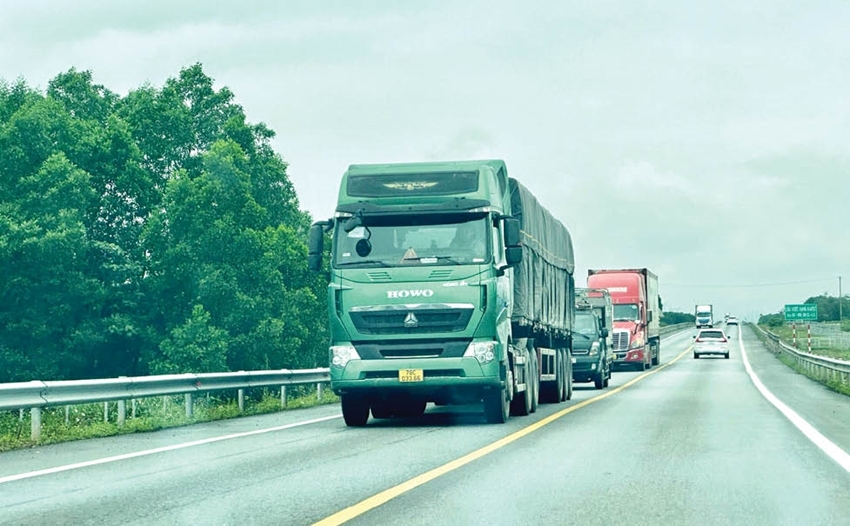 |
| The Cam Lo - La Son Expressway connecting Hue City with provinces in the Central region |
Hue City is also actively improving and completing its transport infrastructure. After investment and upgrades from National Highway 1A to the Cam Lo - La Son, and La Son - Tuy Loan expressways, major routes have been expanded. Eastern routes, coastal roads, and the upcoming 2,36km long Thuan An estuary overpass bridge with a total investment of 2.400 billion VND will soon be completed, connecting the city center to industrial parks and economic zones. This also establishes inter-regional connectivity with nearby economic centers such as Da Nang and Quang Tri, while creating favorable conditions for the high-quality tourism and service sectors to develop.
Beyond physical transport and technical infrastructure, Hue also focuses on “soft infrastructure”- the elements connecting people, culture, and environment. The city is considered the heritage “capital” of Central Vietnam, with more than 150 recognized historical and cultural sites, including 8 cultural heritages recognized by UNESCO as world or regional heritage. Its rich cultural, historical, festival, and natural diversity has enabled the tourism industry to flourish, contributing significantly to local budget revenue.
Growing together
In the master plan for the 2021–2030 period with a vision to 2050, Hue City identifies a “symbiotic” development direction, meaning expanding urban space while simultaneously facilitating the growth of economic corridors. This new planning approach focuses on balancing economic development with the preservation of cultural and ecological values for a centrally governed municipality. At the same time, it defines three pillars: tourism - industry - culture that will be linked in a way that supports joint development among provinces and cities across the Central region.
According to former Chairman of Hue City People’s Committee Nguyen Van Phuong, to maximize economic efficiency and spread the value of heritage, Hue City will continue strengthening regional tourism linkages with Da Nang and Quang Tri, forming a Central tourism hub aimed at international markets. At the same time, the city must promote connections for agricultural product consumption, develop marine tourism linked with heritage culture and local landscapes. In the industrial sector, development must be selective and sustainable. The automobile manufacturing and mechanical engineering sector, supporting industries, and logistics are considered spearhead fields, but they must be accompanied by strict environmental impact control, improved technology standards, and stronger management capacity. “Hue City does not pursue growth at all costs; instead, it seeks harmonious development, where every economic sector operates in close interaction with the ecological environment and local communities,” Mr. Phuong said.
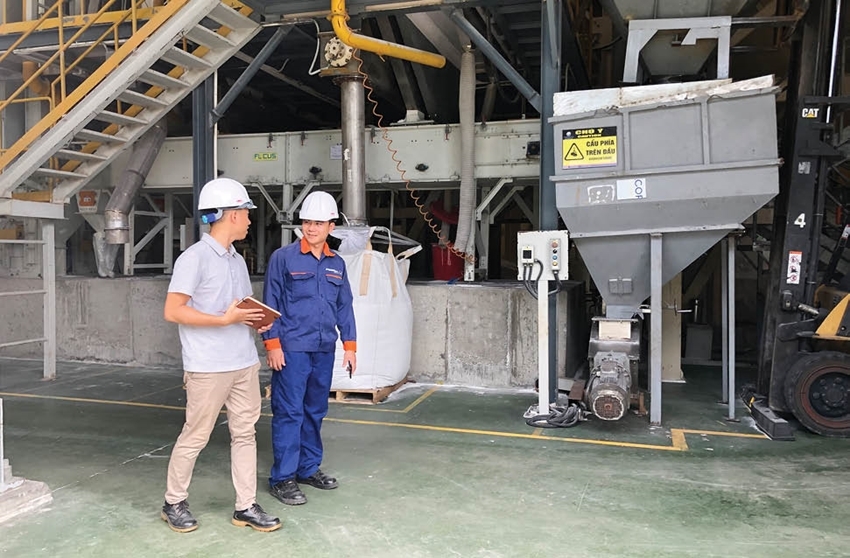 |
| Many factories invest in technology and equipment aligned with green and clean production |
According to economic experts, with this orientation, Hue City must make rational use of its inherent advantages while maintaining the identity of a “heritage city”. New development areas shaped along economic corridors such as the North-South and East-West economic corridors, the coastal urban economic corridor, and dynamic centers within Hue City, the industrial parks, as well as the Chan May - Lang Co Economic Zone, must be carefully calculated in terms of population density, technical infrastructure, and environmental impact to avoid placing pressure on the Complex of Hue Monuments, a UNESCO-recognized world heritage site.
Former Deputy Minister of Construction and Chairman of Vietnam Association of Urban Planning and Development, Mr. Tran Ngoc Chinh, stated that with its position, conditions, and inherent potential, Hue City is gradually asserting itself as a centrally governed municipality, playing the role of “regional coordinator of Central Vietnam”, forming a new growth axis together with Da Nang and Quang Tri. However, to build a foundation for this widespread development, the completion of the transport connectivity network must receive top priority from central ministries, agencies, and local authorities.