



 |
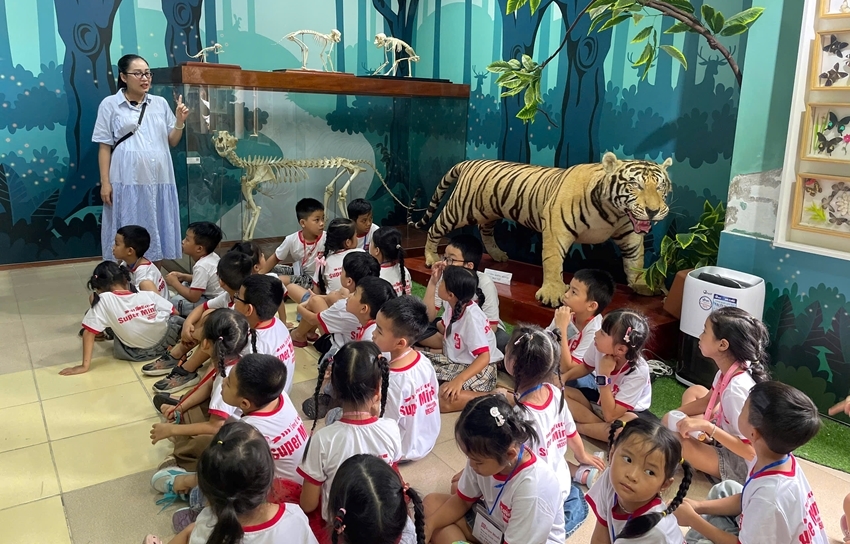
| Raising awareness and inspiring a love for nature and biodiversity conservation among younger generations |
This program is not just an extracurricular activity but a continuous educational journey, designed to stir emotions, enhance understanding, and plant the seeds of environmental awareness among children, the future generation of the nation. A highlight of the program is the thoughtful integration of conservation messages on the occasion of the International Nature Conservation Day (July 28th) and International Tiger Day (July 29th) into a series of hands-on activities. These were presented in a lively, accessible, and age-appropriate way for children.
Currently, only six tiger subspecies remain in the world, all of which are listed as Endangered by the IUCN. In Vietnam, the Indochinese tiger has virtually disappeared from the wild. The main causes of this decline include illegal hunting for skin, bones, teeth, and claws, often used in traditional medicine, jewelry, or as display items, as well as habitat loss due to deforestation. The trade and use of tiger products continue to occur in several countries, including Vietnam.
The Central Coastal Nature Museum currently has a real tiger specimen on display, preserved using scientific techniques to maintain the animal’s natural shape, size, and appearance. This serves as both an educational and communicative tool to raise public awareness about biodiversity conservation for the community, especially among young people.
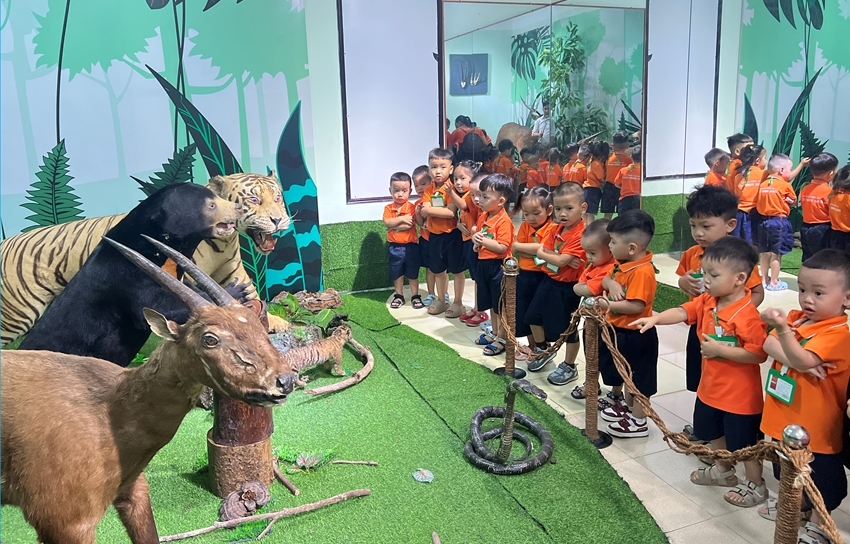 |
| Children exploring and experiencing the wonders of nature through specimens displayed at the Central Coastal Nature Museum |
A representative from the Central Coastal Nature Museum stated that within the museum’s development strategy, public education and communication, particularly for children, remain a top priority. On these two important international days, the museum hopes to convey the message that protecting nature requires more than slogans; it requires concrete actions, such as saving electricity, not littering, avoiding the hunting of wild animals, and refraining from cutting down forests.
As climate change and the ongoing biodiversity crisis are threatening the planet’s future, the role of natural history museums should go beyond preservation and display. They must become “inspiration hubs” for environmental awareness within communities, especially for children. The Central Coastal Nature Museum is gradually realizing this goal through a gentle, creative, and humane approach, with a strong emphasis on deep, meaningful educational communication.